The defender of time
While reviving the Defender of time (at Lafayette Anticipations), Cyprien Gaillard shows us the ruins and disorder of our time (at the Palais de Tokyo). An initiatory exhibition in two parts that speaks volumes about our fractures and cracks, and about our dreams of reconstruction and regeneration.
Once upon a time, there was a child who, every day, would stop running beneath a clock to watch The Defender of Time —a monumental automaton perched atop a brass rock, battling with sword and shield against the onslaught of a time-devouring crab, dragon, and rooster… Created by Jacques Monestier, this mobile wall sculpture, installed in 1979 in the Horloge district of Paris, near the Centre Pompidou, was scheduled to cease operation in 2003 due to lack of maintenance… Gone were the three strokes of the bronze drum announcing the intermittent battle each hour (the man being attacked by one of the three allegorical animals, chosen by a “random programmer”…). Gone was the carousel of time suspended on the golden knight’s sword. Gone were those moments of reverie and fascination stolen from time itself…
It is to this shattered dream that Cyprien Gaillard is giving new life today, after seeing his paralyzed knight, abandoned to the four winds, and his gilded brass skin tarnish and erode while it was soiled by a colony of pigeons…: “I have always wanted to breathe new life into the work of another,” explains the artist, who managed to get the work, abandoned to its sad fate, removed for restoration. Currently enthroned in the heart of the high-tech tower of the Lafayette Anticipations 1 foundation (sponsor of the project), before returning to its original location at the end of the exhibition, it appears in its original splendor (mixing hammered brass gilded with leaf and oxidized brass – the sculpture is a masterpiece of goldsmithing), but also bears the marks of time: it is thus soiled with pigeon droppings and dust that The Defender of Time valiantly resumed the fight against its assailants.
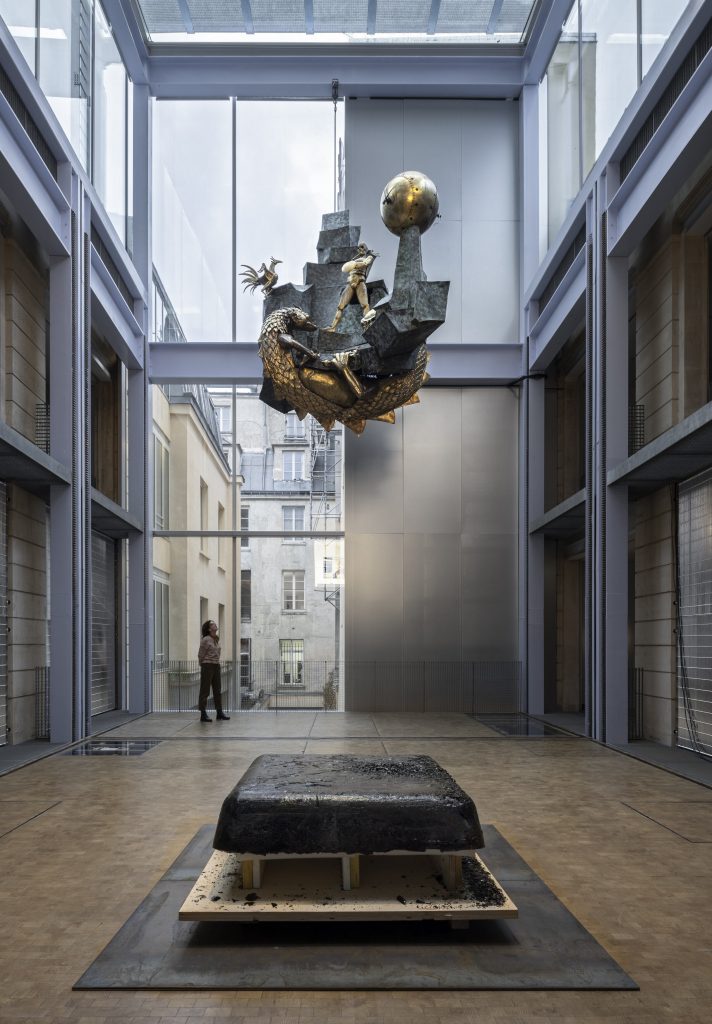
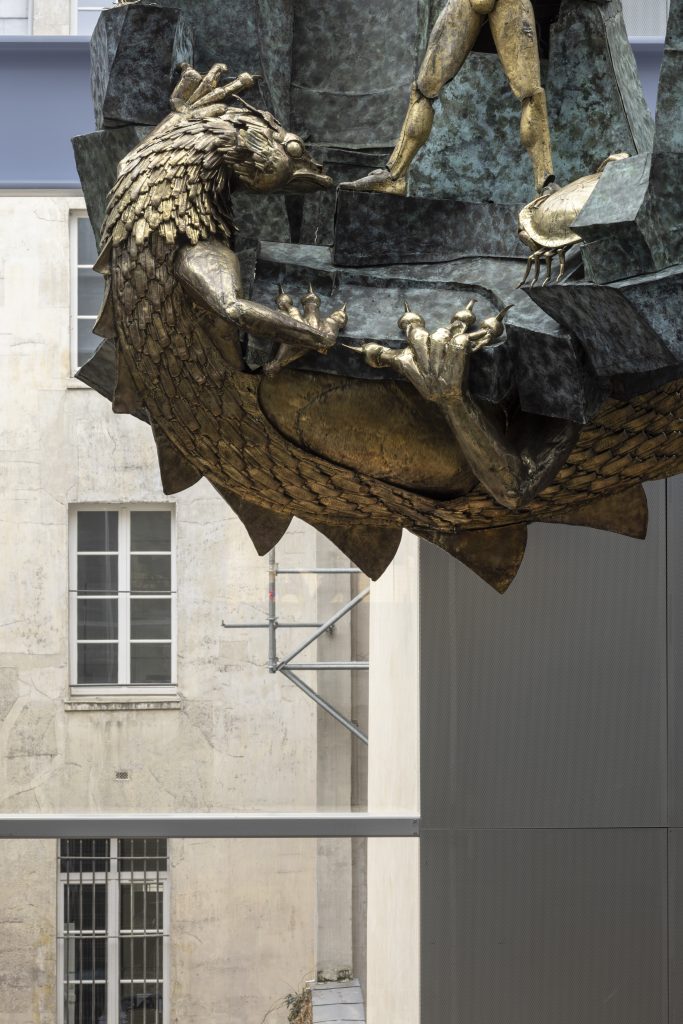
We admire the humility of the artist who steps back to let his predecessor take center stage ; as well as the audacity of the Lafayette Anticipations Foundation, which followed Cyprien Gaillard in this unprecedented artistic endeavor, reducing the intervention to the repair of an abandoned work and a few imperceptible modifications within it. Among these modifications was the transformation of the soundscape accompanying each battle: the crashing waves , the earth's rumble , and the wind's whisper were replaced by hits from 2003, the year the automaton was decommissioned—pop hits alternating with ambient music by Laraaji.
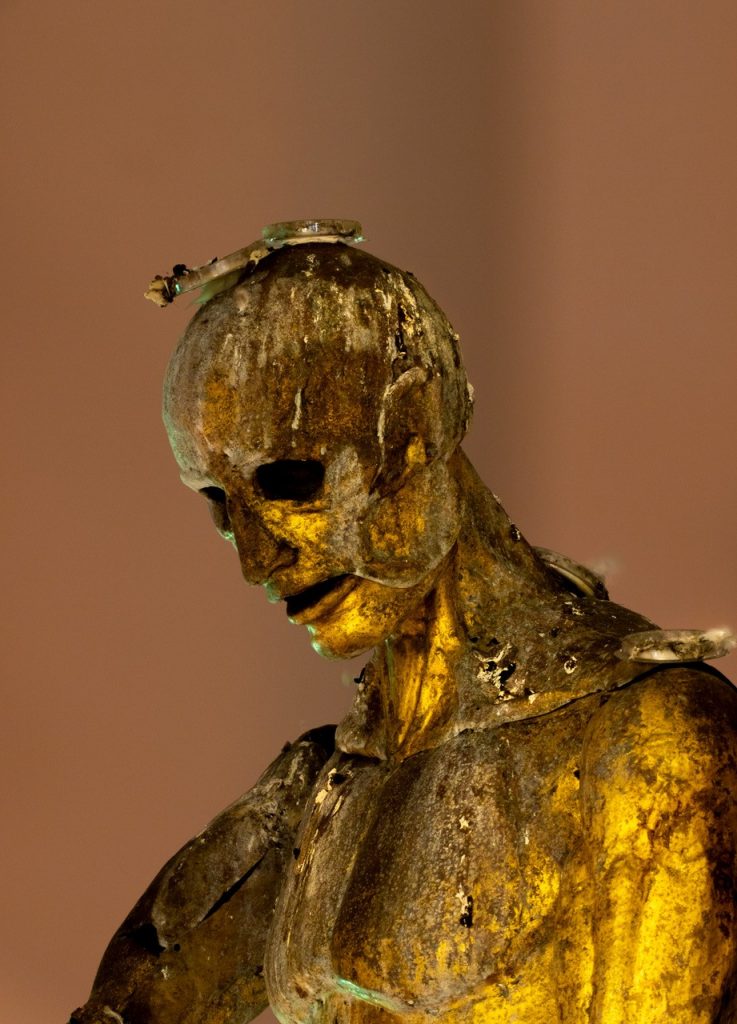
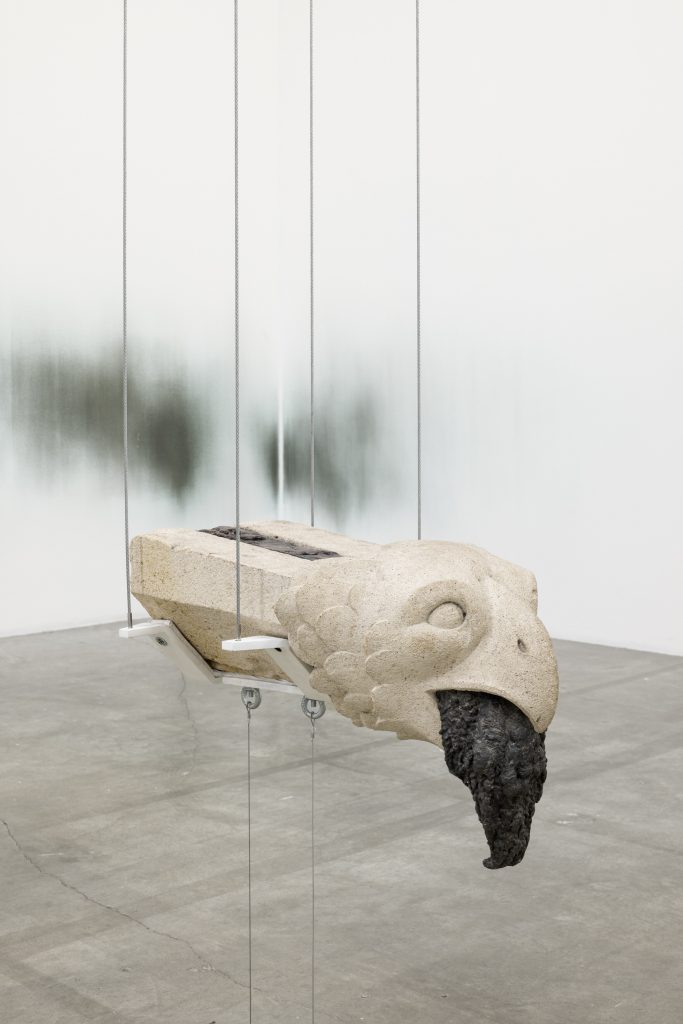
At the Palais de Tokyo, a different story is told, that of our relationship to time, to traces of decay and disintegration and to the orchestration of their erasure, that of "our link to collapse and reconstruction" ... Through our ruins, our abandoned territories and our wounded lands, but also the disorder of our gutted cities and their scaffolding...
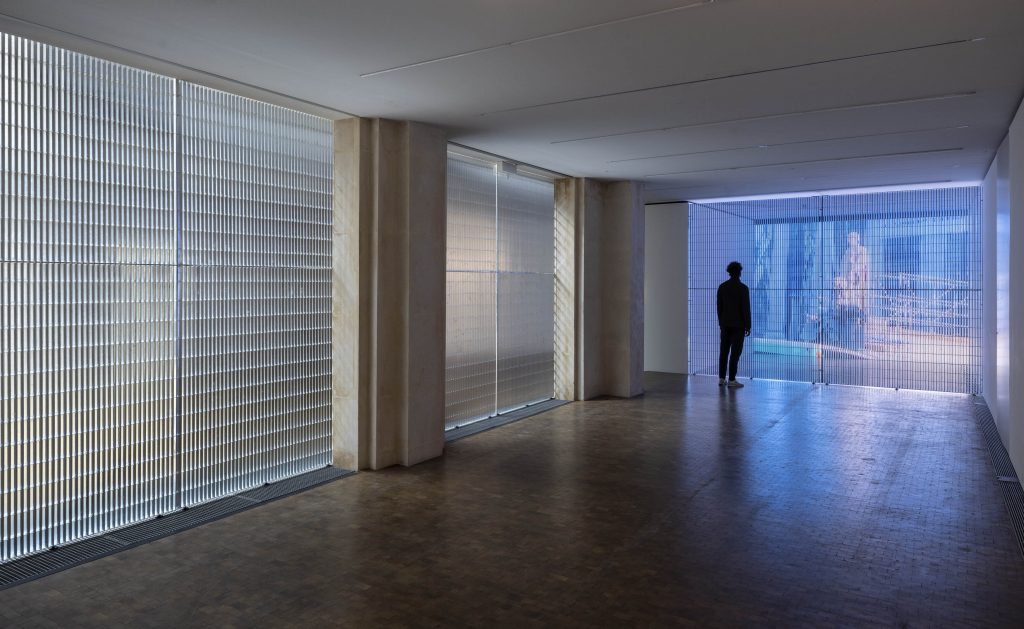
In Frise , a video projected onto a screen, the artist confronts us with the disappearance of our monuments and the imprisonment of our vision within the geometric tangle of metal frameworks covering our facades under construction. Another disappearance is that of the "Love Locks" torn from the bridges to which they had been attached and recovered in large construction bags from the depots of the Paris road maintenance department: dangerous love-related waste (threatening to collapse the bridges under their weight) transformed by the artist into ready-mades, as if to better resist disappearance…
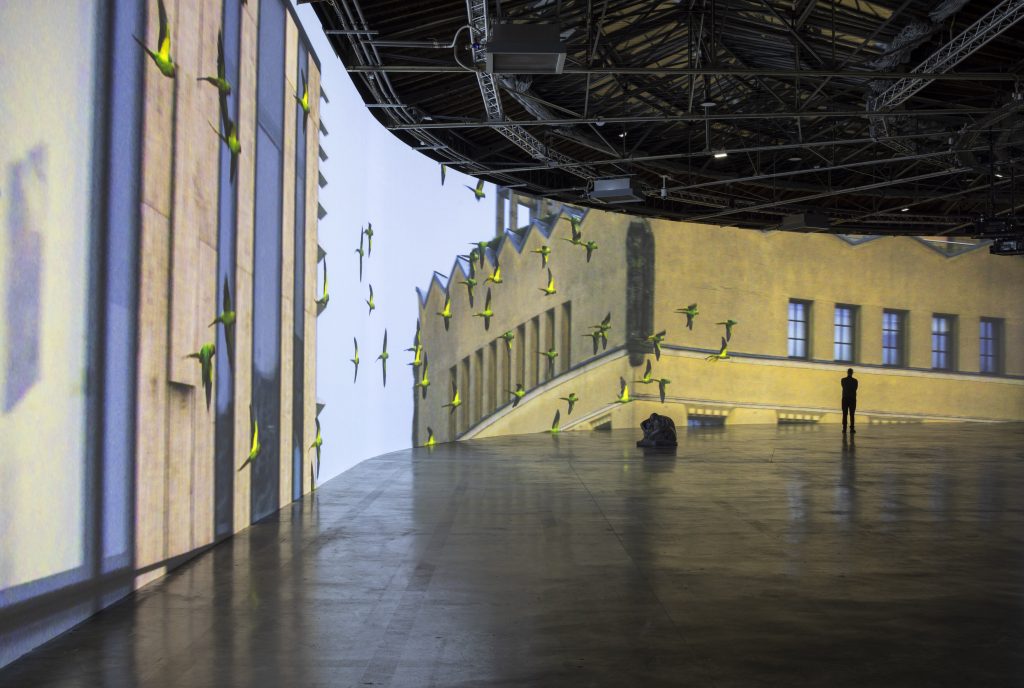
Like Humpty Dumpty, the egg-shaped character from an 18th - century English nursery rhyme popularized by his absurd dialogue with Alice in Through the Looking-Glass 2 , who, having fallen off a wall while boasting of his superpowers, will not be able, despite multiple attempts, to regain his original state, we seek, according to Cyprien Gaillard, to erase our flaws and our disorders, to fight against our collapse. A struggle he inscribed in the mechanism of the clock guarded by the Defender of Time, by reversing the movement of the hands , which resumed their eternal countdown but in reverse of the present , as if to go backwards… An impossible quest , as the shadows drawn in steel powder on the walls by guest artist Daniel Turner seem to illustrate: ready to disintegrate before our eyes, born from combustion (of dissolved parts of the Eiffel Tower renovation site) and destined to disappear, they are a beautiful mise en abyme of dissolution, a beautiful allegory of decay, a disturbing capture of the work of time…
- Space rehabilitated by the Dutch architect Rem Koolhaas (OMA/AMO agency).
- Continuation of Alice's Adventures in Wonderland published in 1871 by Lewis Carroll.
The "HUMPTY \ DUMPTY" exhibition is presented in two parts:
“HUMPTY” – Palais de Tokyo
“DUMPTY” – Lafayette Anticipations
Until January 8