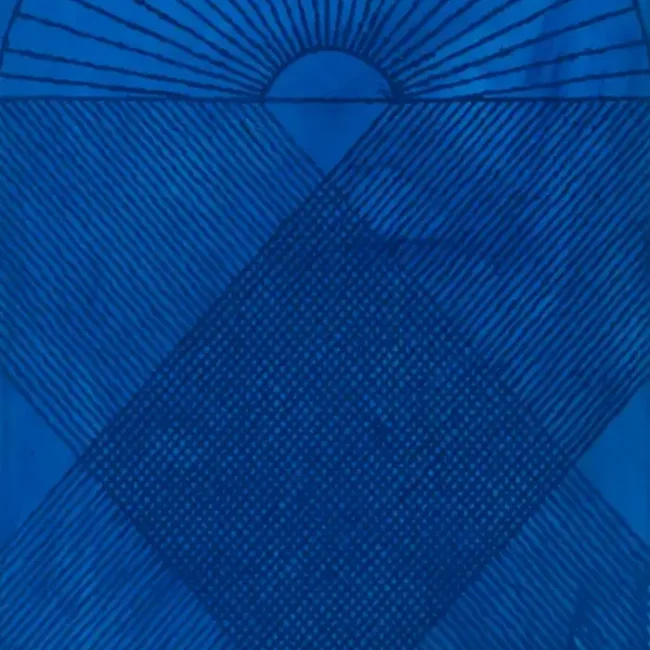
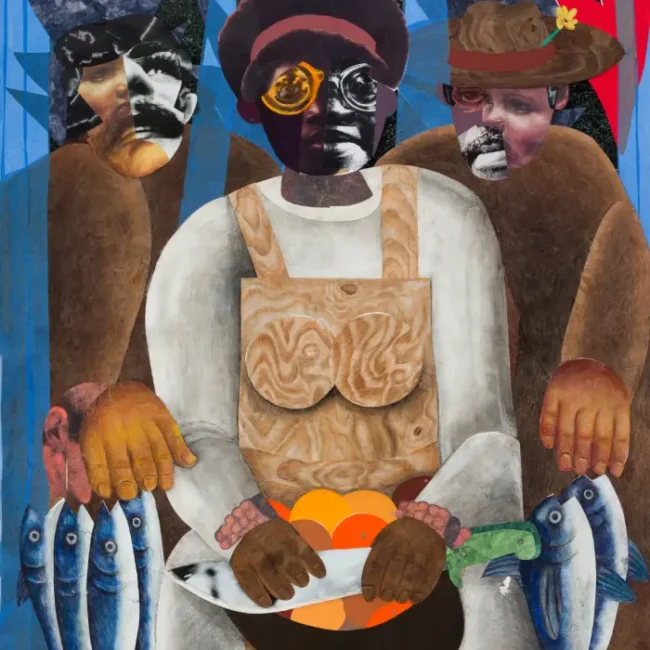
With "Intersections", Hilda Palafox and Elsa-Louise Manceaux confront two ways of expanding the territory of painting. The first anchors it in the body and the memory of the earth; the second opens it up to language, sound and contemporary technologies.
Presented to mark the bicentenary of diplomatic relations between France and Mexico, the exhibition at the Mariane Ibrahim Gallery in Paris brings together two artists whose practices "have developed in close dialogue with Mexico." Spread across the gallery's two floors, it dedicates a distinct space to each artist, highlighting both the singularity of their approaches and points of convergence. Hilda Palafox was born there; Elsa-Louise Manceaux settled there more than a decade ago. While their works differ, they both share a common goal: to push the boundaries of the canvas and transform it into a space for relationships.
Hilda Palafox, the memory of the earth
Trained in design at the Instituto Nacional de Bellas Artes in Mexico City, Hilda Palafox has been building a pictorial and muralist career since the mid-2000s that has taken her from Mexico to Japan, via the United States, Spain, Italy, South Korea and Australia, with mural interventions in public spaces as far away as Brazil and Canada.
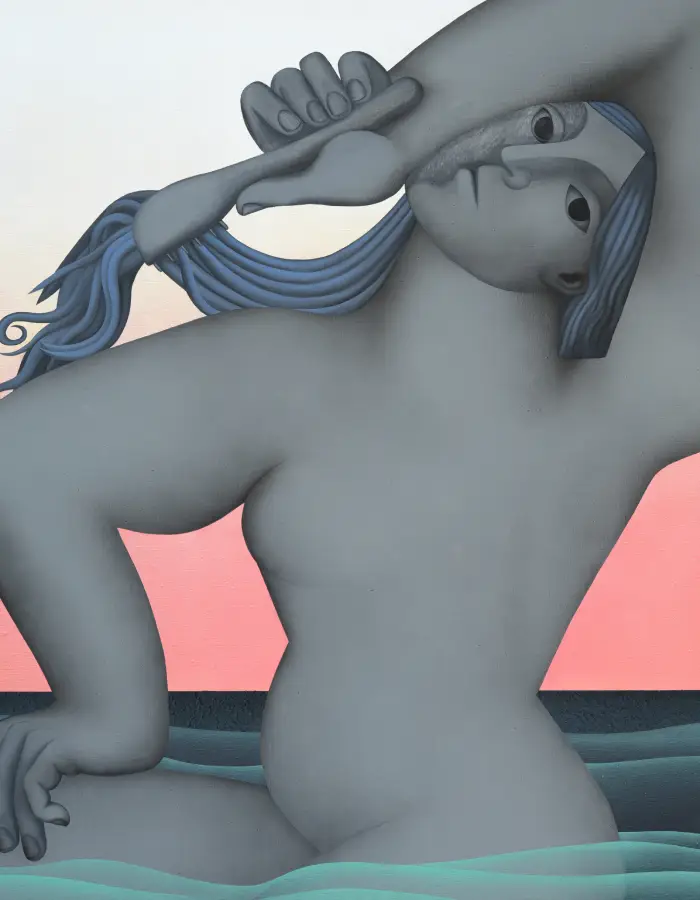
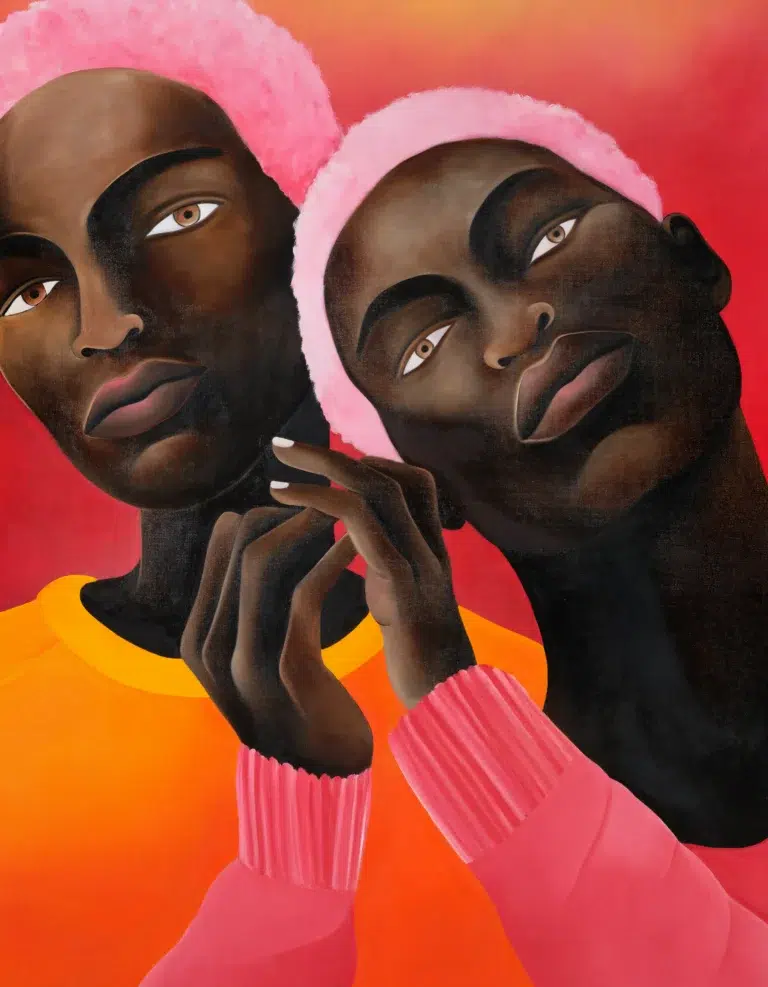
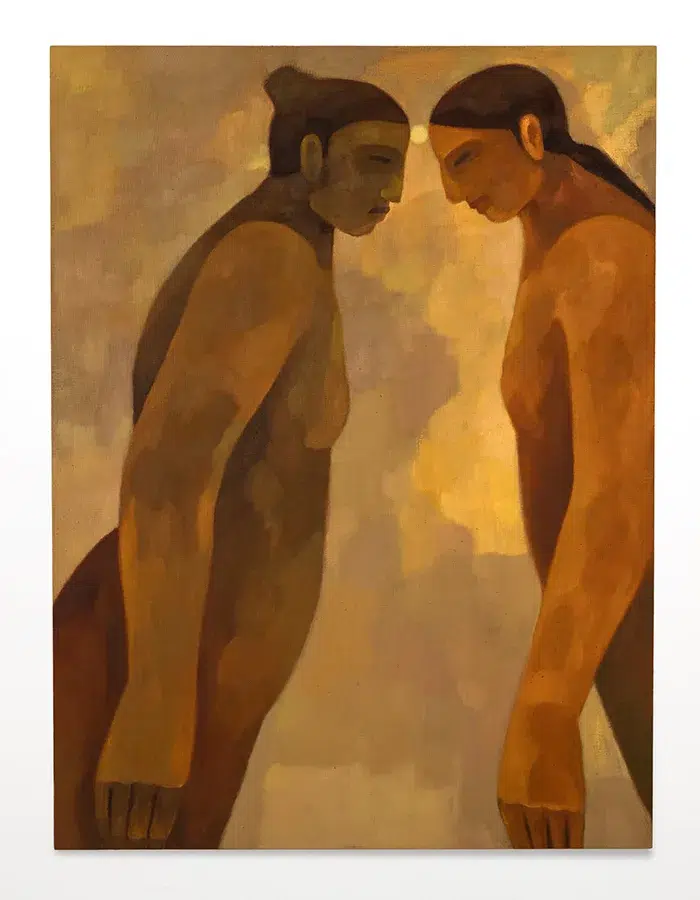
The women painted by Hilda Palafox carry, hold, and move. Their gestures possess the slowness of a ritual and the precision of collective work. Monumental without being heroic, they seem to belong as much to the earth as to the space of the canvas.
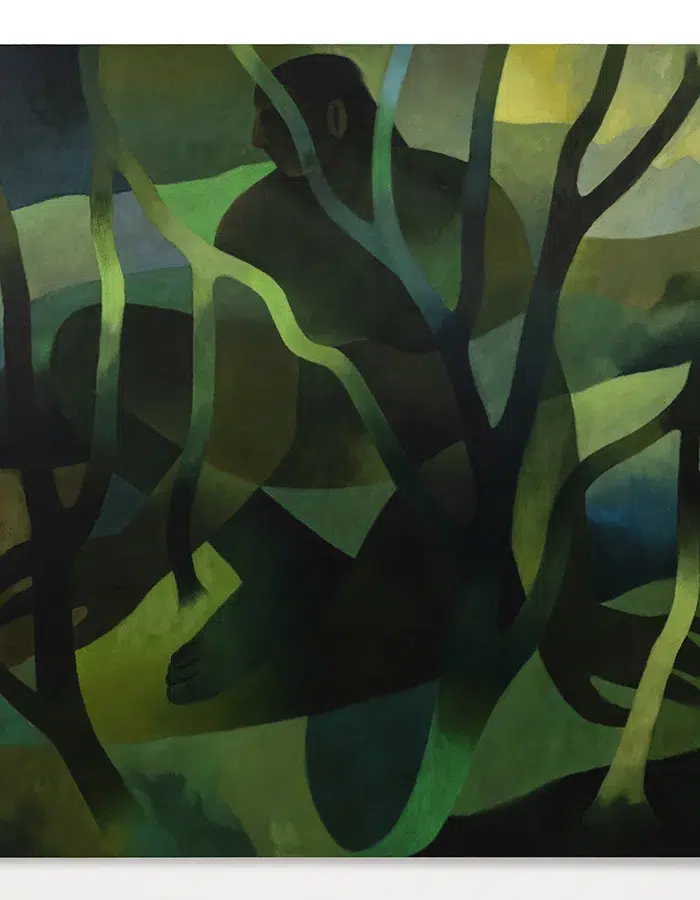
The new series presented in Paris is titled Petricor. The word refers to the smell released by dry earth when the first drops of rain reach the ground. From this almost universal sensation, the artist composes paintings imbued with the memory of the landscape and the possibility of a shared experience. Nature is never a mere backdrop: it permeates the figures, shapes their volumes, and determines the muted tones of the compositions.
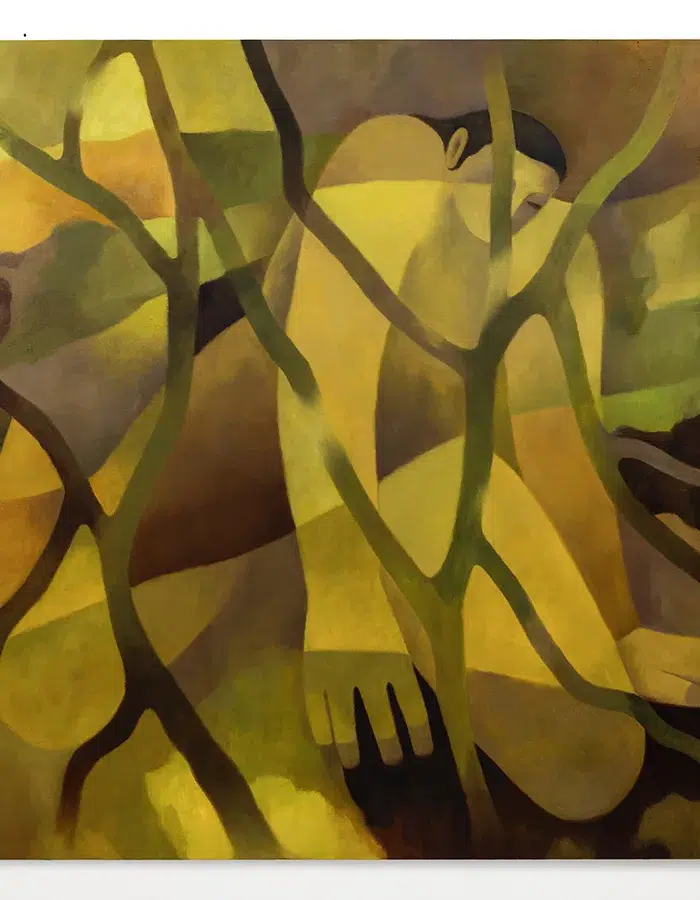
For several years, Palafox has explored the human figure, subjectivity, and the female experience. Her figures possess the stability of sculptures, but this power protects a fragile interiority. Their averted gazes and restrained gestures create atmospheres situated between reality, dream, and spirituality.
In Labor, several women work together to manipulate large expanses of light-colored fabric. The action remains difficult to define. It could evoke a daily activity, a ritual, or the symbolic creation of a territory. Their hands ensure the continuity of the composition and transform individual effort into shared movement. The scene speaks of solidarity without becoming demonstrative.
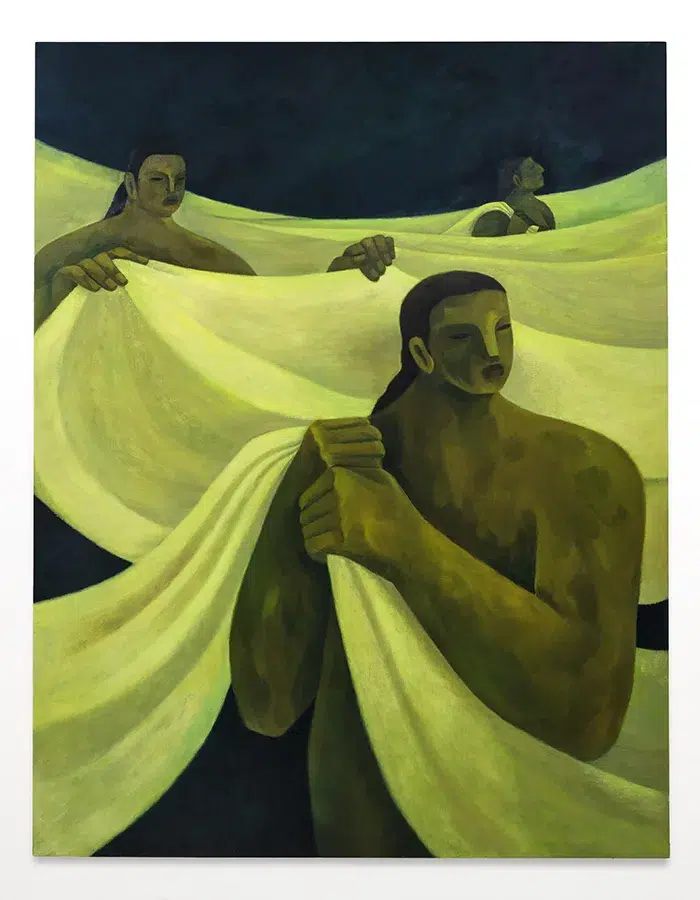
The ecofeminist dimension of her work appears in this continuity between bodies and their environment: the figures sometimes seem to emerge from the landscape before merging into its substance. The collective work then takes on a political significance, suggesting other ways of inhabiting the living world.
Curved lines, flat areas of color, and compact volumes give the figures their distinctive density. Palafox's practice moves between drawing, painting, sculpture, and textiles. A form born on canvas can be extended into clay or fabric without losing its coherence.
Her work also engages with Mexican muralism and Latin American modernism. She retains their taste for imposing formats, powerful figures, and collective compositions, but shifts their narratives. She replaces historical and heroic scenes with feminine experiences, gestures of care, and exchanges based on interdependence. The intimate thus takes on monumental dimensions.
Elsa-Louise Manceaux, painting as an interface
Born in Paris in 1985, Elsa-Louise Manceaux moved to Mexico City in 2012 after studying at the Gerrit Rietveld Academie in Amsterdam. Upon arrival, she received a Mondriaan Fund grant, before completing the SOMA postgraduate program in 2015-2016 and subsequently winning the BBVA-MACG grant. Her work is currently exhibited in institutions such as the Museo Jumex and the Museo de Arte Carrillo Gil.
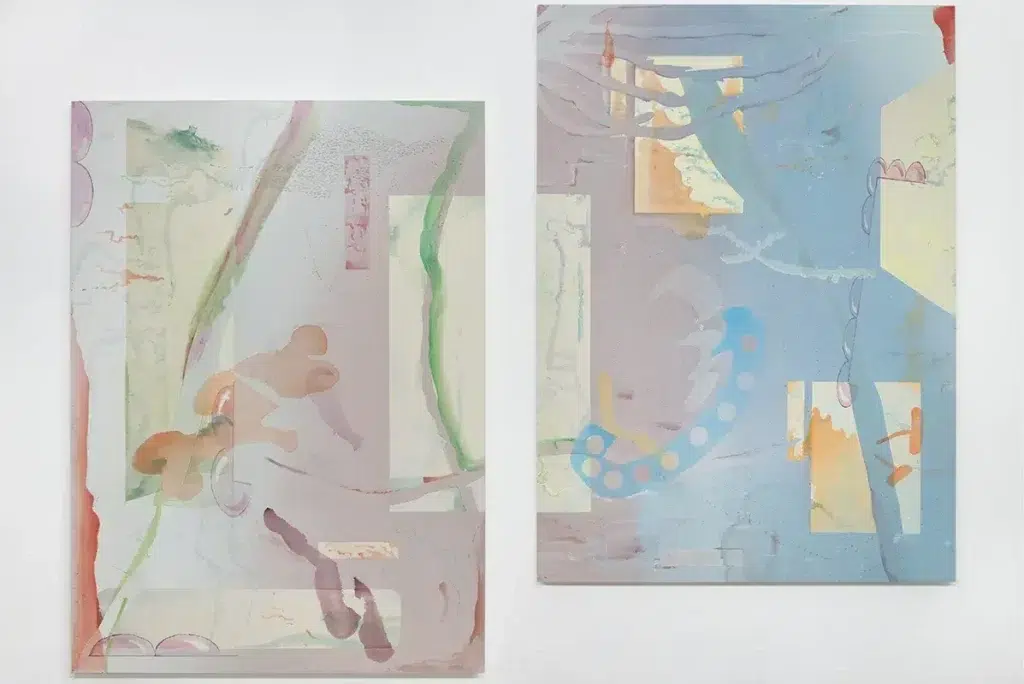
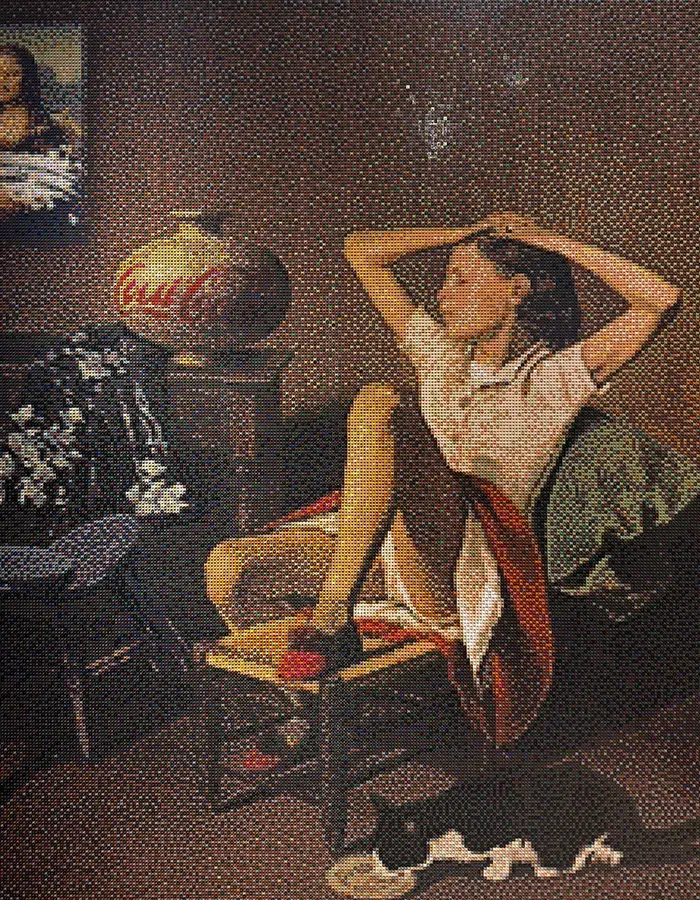
Entitled Surfaces of Exchange, his work combines a new "radio-painting" with several silent paintings: the painting is never a stable surface, but a space that words and voices constantly move, until its perception is transformed.
In Elsa-Louise Manceaux's work, language, sound and moving image are introduced directly into the composition, blurring the line between what is seen, heard and told.
Manceaux thus constructs deliberately anachronistic narratives, where historical references and contemporary technologies intersect, while the relationships between information, matter and meaning remain constantly open.
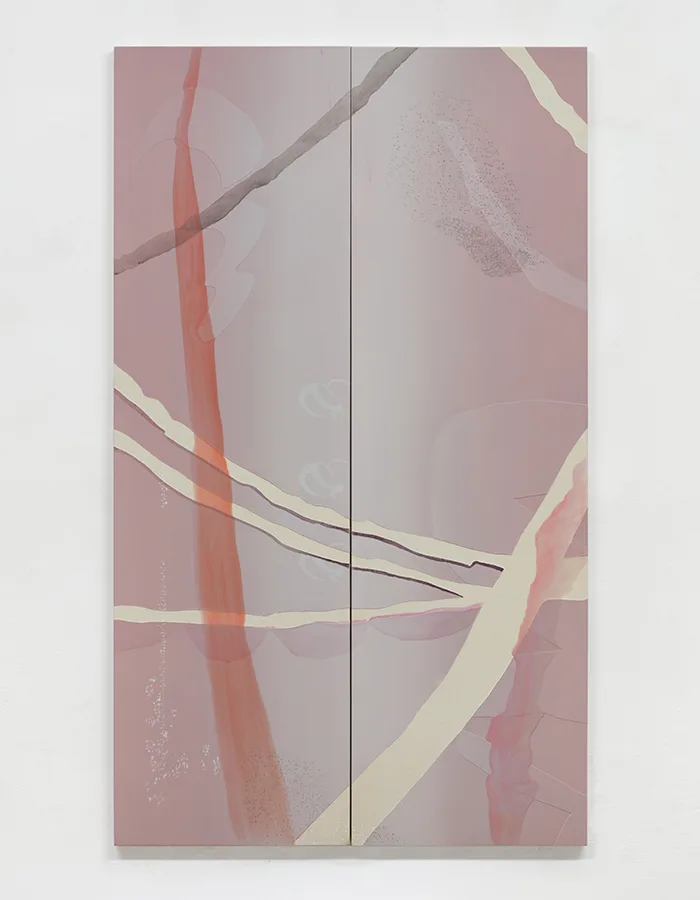
For more than ten years, his practice has thus extended beyond the strictly visual field to include installation, performance and moving image – an extension that the radio-painting of Surfaces d'échanges directly embodies, by bringing into the canvas the duration and diffusion inherent to radio.
The two artists ultimately take opposing directions while continuing to respond to each other. Hilda Palafox connects painting to the body, landscape, and memory; Elsa-Louise Manceaux confronts it with speech, sound, and technology. “Intersections” finds its coherence precisely in this divergence: the canvas no longer appears as a closed surface, but as a territory traversed by presences, narratives, and connections.
“Elsa-Louise Manceaux & Hilda Palafox: Intersections”
Mariane Ibrahim
18, avenue Matignon, Paris 8th
From 3 September to 3 October 2026