German painter Vivian Greven is holding her first solo exhibition in South Korea in Seoul. Brought together under the title "In Bloom", her recent canvases make metamorphosis a language: bodies, flowers and hands pass from one state to another, suspended on the threshold of their own flowering.
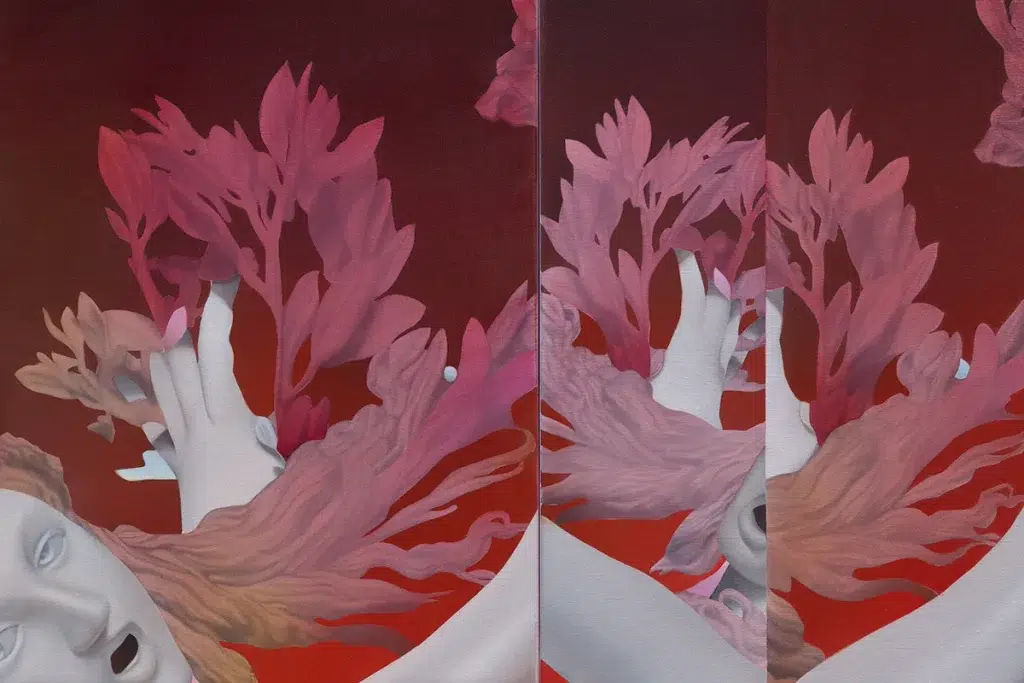
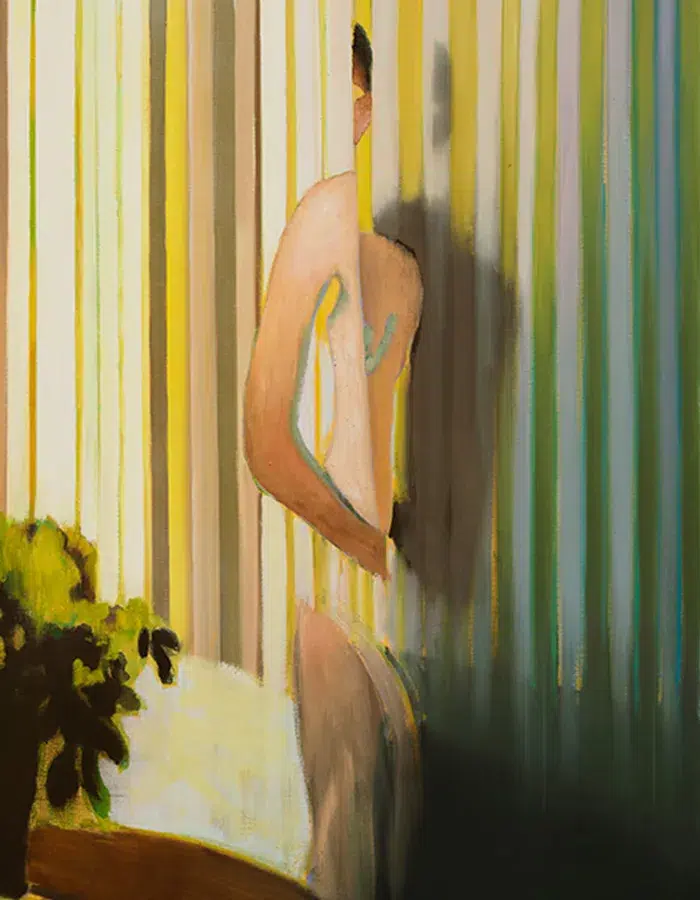
Enigmatic figures fill the canvas, and the gaze glides over a surface of almost unreal softness. Fragments of bodies touch, separate, and rejoin; a hand closes its fingers around a flower, and the eye follows the movement to the opening corolla. Here, Daphne becomes a tree; there, drops of water trickle down Ondine. Light and shadow intertwine and then diffuse, leaving us never sure whether the scene belongs to day or night, to the present moment or to eternity. Time seems to have stopped.
For Greven, metamorphosis is not simply a change of form. Nourished by mythological tales such as that of Apollo and Daphne, his painting presents beings that are unfixed: bodies transform and blur their boundaries with flowers and plants, while the forms also evoke sculpture. The artist is less concerned with the transformation itself than with the continuous process by which everything comes into being. To be born, to age, to die: we are constantly unraveling and remaking ourselves. The metamorphosis of mythological heroes is merely a vibrant reflection of our ordinary condition.
Three motifs recur: the hand, the woman, the flower. The hand perceives, connects, brings into contact—it is the point where change occurs, as in Daphne's Hand I (2026), a reinterpretation of Bernini's Apollo and Daphne (1622–1625). It gives form to invisible thought and shifts the instant into duration. Women appear as the subjects who undergo this transformation; the flower, the symbol that makes it visible. An ambivalent flower, moreover: it celebrates life as much as it recalls death, a dazzling vanity where splendor and emptiness mingle. In Undine I (2026), after Chauncey Ives's Ondine (1880), the water spirit, haloed in blue, contains both the beginning and the end of life, as well as an idea of eternity.
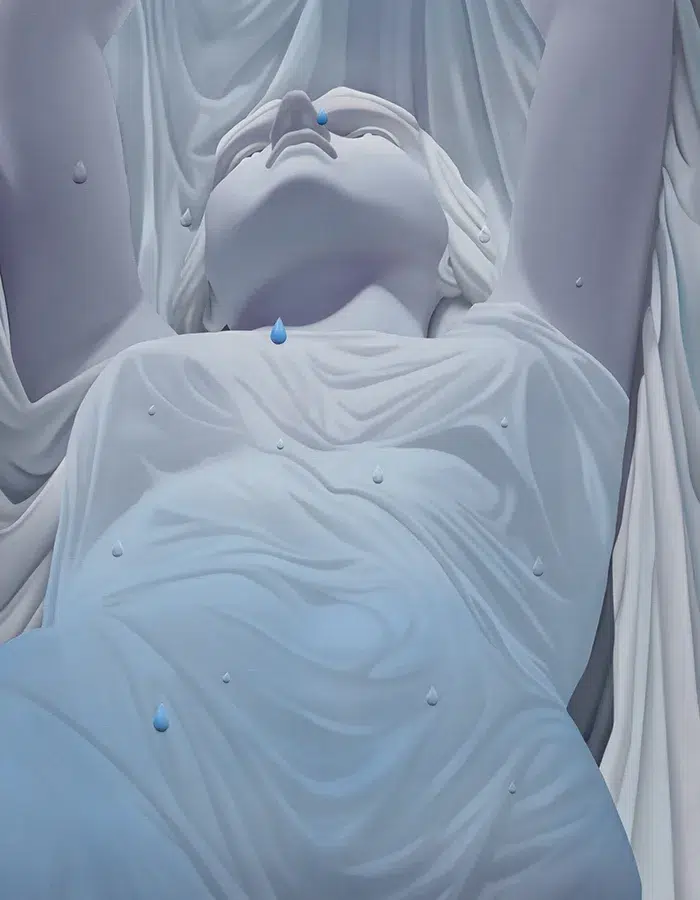
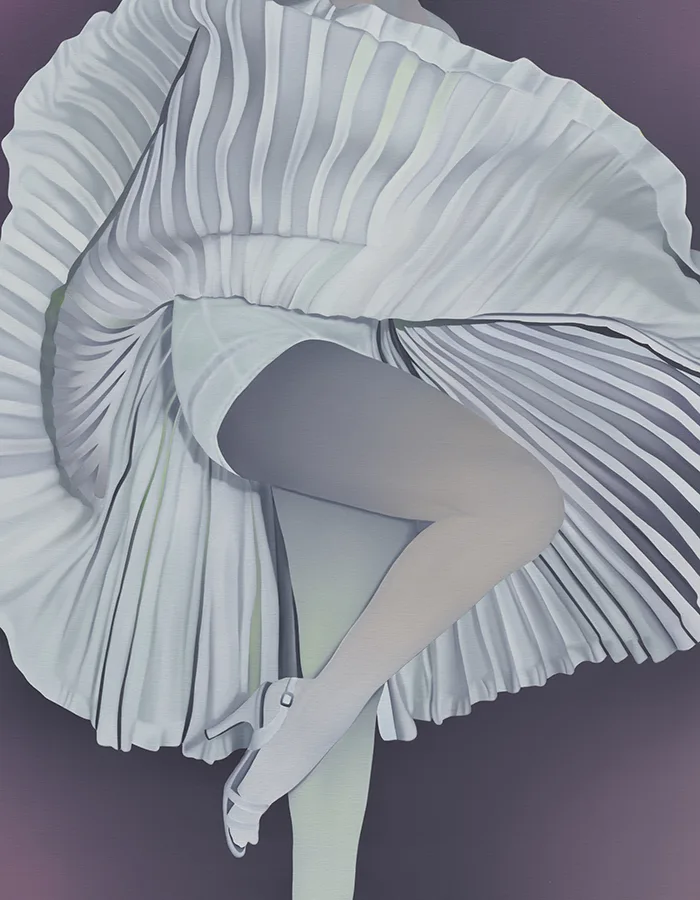
Vivian Greven, Marilyn II, 2026, Oil on canvas, 160 × 120 cm | 63 × 47 1/4 in. © Courtesy of the artist and Perrotin.
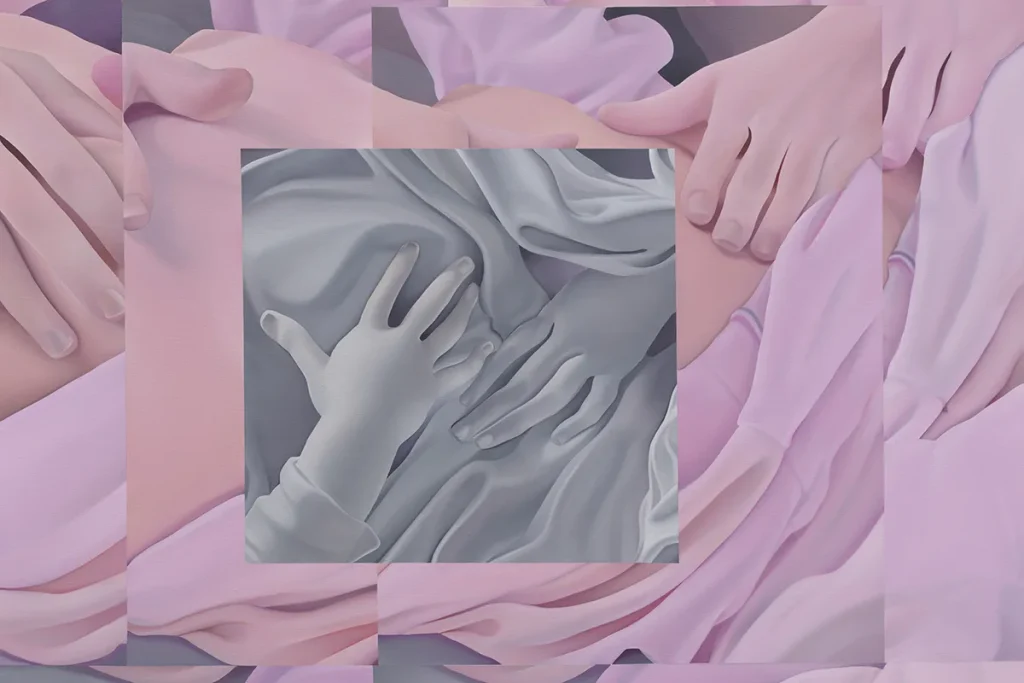
Greven also refuses to become fixed in her style. Some images create volume and illusion (the water droplet in Undine I ), while others, flat as in After Daphne II (2026), recall the very surface of the painting. Her reflection on the origins of painting culminates in Bond IV (2026), where she superimposes Bernini 's Ecstasy of Blessed Ludovica Albertoni (1671-1674) and images from erotic films. The rectangular frames are repeated, separating art from reality and evoking the countless rectangular windows through which images and illusions reach us today.
Hence, no doubt, the distance these figures maintain, so beautiful that one cannot tear one's eyes away, and yet inaccessible. They seem to float somewhere, neither entirely present nor entirely absent. For an image always carries within it the absence of what it shows: it affirms a presence already vanished. Greven gives this lack a captivating form. Faces and eyes, with a few exceptions, elude us; the body, framed in close-up, escapes all grasp. Beauty, here, demands its share of shadow—and it is in this interplay of the veiled and the unveiled that the desire to look again is born.
"In Bloom"
Perrotin Gallery Seoul
10 Dosan-daero 45-gil, Gangnam-gu, Seoul (South Korea)
Until August 19, 2026