The exhibition transcends love through complex yet symbolic representations.


Introduction: In the heart of Paris, not far from République, is the romantic exhibition of Hyangmok Baïk, a South Korean painter. The adjective "romantic" evokes attitudes and behaviors of profound sensitivity, exaltation, and reverie. On large canvases, layers of pastel-toned paint are superimposed to create realistic human and animal figures, serving as a bridge between reality and illustration. Drawing inspiration from mythological tales, biblical stories, and contemporary symbols related to our emotional states, the South Korean artist has traced the turbulent path toward the inevitable feeling of love.
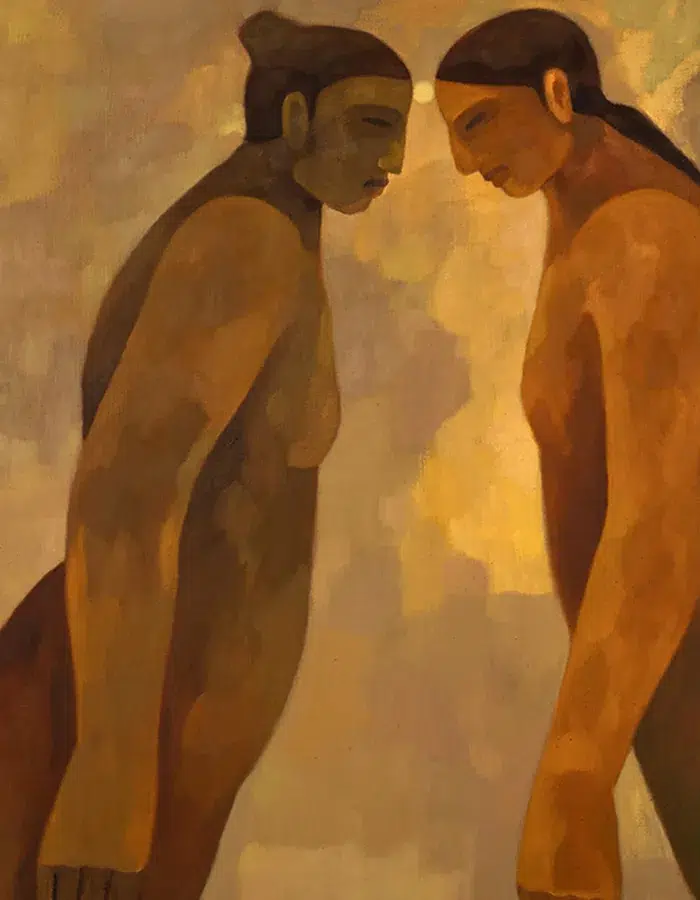
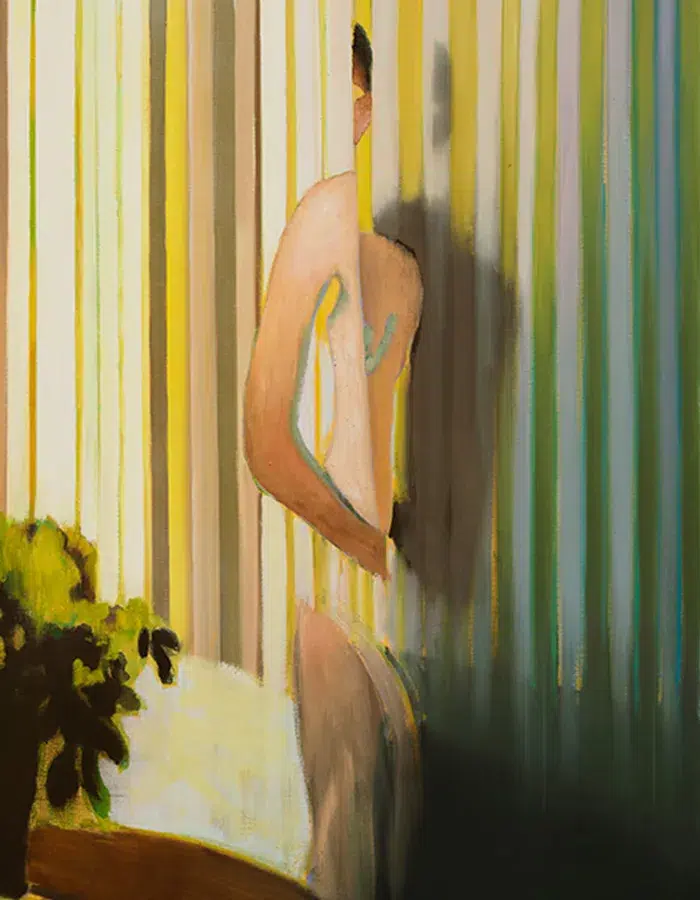
We observe a freedom in the artwork that initially surprises us, then captivates us. In a seemingly utopian world, the sky is blue-green, the earth is verdant, and the bodies are naked, though not female. The main protagonists are men, with sculpted and marked bodies, their faces expressing surprise, sadness, and disappointment. Hyangmok Baïk illustrates an alternative to male vulnerability. Despite a theme centered on love, our attention is diverted from the feminine connotations this subject evokes. The eroticization of their perfect bodies allows us to explore the question of devotion to love through the body and its cult. Their diverse appearances create a cosmopolitan atmosphere in which the outcast man is no longer marginalized. This tolerance reinforces our universal perception of love, particularly its tensions between freedom and confinement.


Among a multitude of subtle details, recurring symbols appear, adding a touch of mystery to the visual narrative. The figure of the white swan is translated into Korean as Baekjo , and its resonance with the artist's name, Baik, is no coincidence. The swan is often associated with a luminous being, even becoming, for some, a symbol of love and fidelity. In Hyangmok's work, it could represent love in the form of a presence, like that of a companion who follows us, understands us, but is also capable of being hurt. But does the swan represent our self-love or the love we dedicate to others? Its powerful presence in an intimate setting suggests that this self-love lives at our pace until it dies, becoming an inert black swan, carried by the man depicted as a savior.

Other animals join the scene, such as the black cat, the white dove, and the unicorn. With its four paws firmly on the ground and its gaze fixed upon us, the cat is often feared for its disdainful indifference and enviable independence, unlike the dove, which carries a message of hope and love through an uncertain and doubtful future. The unicorn, depicted in countless stories, embodies the docile yet indomitable strength of a pure, but above all, powerful being. The chance encounters of these three animals present an allegory for the external pressures that weigh upon ordinary mortals.
Humanity grapples with the diverse emotions of love, whether through wounded suffering, at the heart of a love triangle, or as a Catholic figure like Jesus or Adam. Between hope and disappointment, our perceptions of this state clash in these pictorial explorations. Cigarettes are smoked and flowers fall to the ground; arrows pierce hearts, but are they truly destructive? Body parts linger scattered throughout these representations like fragments of human beings, from a hand to an eye, to a foot. Both offerings and watchful presences, these parasitic fragments further obscure our understanding of events, much like Hyangmok Baik stated about his exhibition: "Love resists clarity."


Despite a tragic tale of the fatal suffering caused by love, the soft, poetic colors evoke a sense of optimism. Humanity is now at the heart of the narrative, and the exposed body underscores the beauty of nudity, a symbol of vulnerability and authenticity. Whether human or angelic, the protagonists find themselves victims of their own introspection, yet never truly alone. A dove, a cat, a swan, or a unicorn becomes an emotional bridge, allowing the characters to understand and process their inner turmoil.
“Have you ever fallen in Love? »
24 rue Béranger, Paris 3rd
Until June 13, 2026
Tuesday to Saturday, 10:30 am – 19:00 pm
@193Gallery