
Between painting and sculpture, Vojtěch Kovařík imagines imposing figures whose power hints at doubt and vulnerability. In "In Between," the Czech artist revisits mythology to explore what unites beings as much as what separates them.
It was at Art Basel last June that I discovered the work of Vojtěch Kovařík. Amidst the bustle of the fair, his figures seemed to impose a different temporality. Massive, almost sculpted in color, they possessed the silent presence of ancient statues while simultaneously revealing something profoundly human. This initial impression finds an echo today in "In Between," on view from September 9 to October 24, 2026, at Mendes Wood DM in New York.
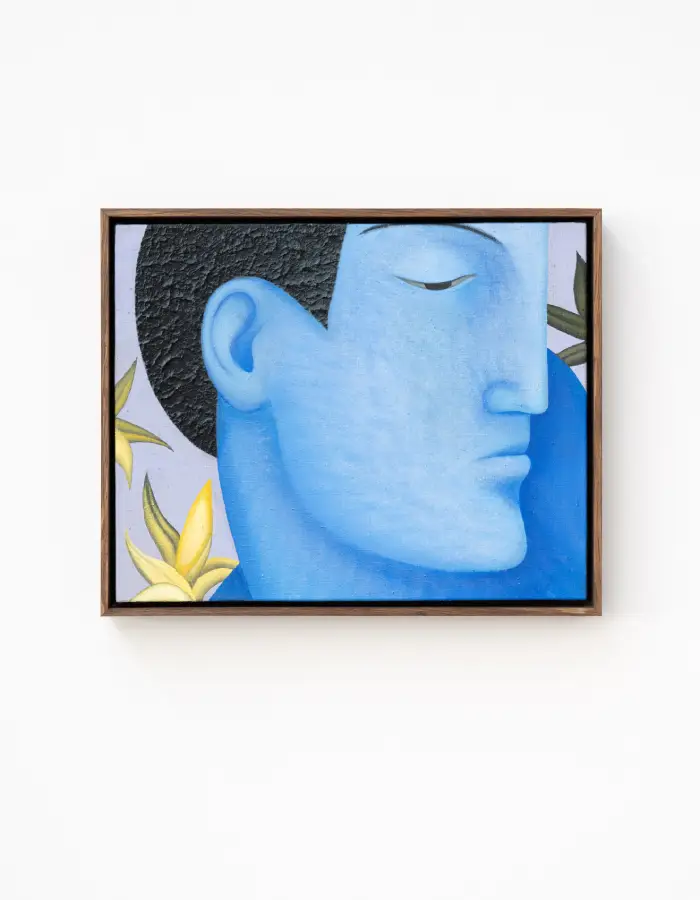
Born in 1993 in Valašské Meziříčí, Czech Republic, and now based in Brno, Kovařík initially trained in ceramics and sculpture. This background continues to guide his painting. His figures appear sculpted or extracted from matter; the sand incorporated into the acrylic, the accentuated shadows, and the varnished backgrounds give the bodies an almost mineral relief. Their generous forms and rounded shapes sometimes reminded me of Fernando Botero's work, though they lack the same spirit. Kovařík's effigies are more restrained in their expressions and in their use of color. Their scale is not meant to be humorous; rather, it evokes a sense of gravity. Too large for the space that contains them, these bodies press against the edges of the frame.
Mythology has long been the starting point for his work. In "In Between," however, he does not revisit ancient tales to illustrate them faithfully or make them immediately recognizable. The artist considers them an open language, a set of forms and symbols that he can shift and reinvent. The gods and heroes lose their sacred distance. They doubt, wait, draw closer, or seem to seek in the gaze of the other a presence capable of breaking their solitude.
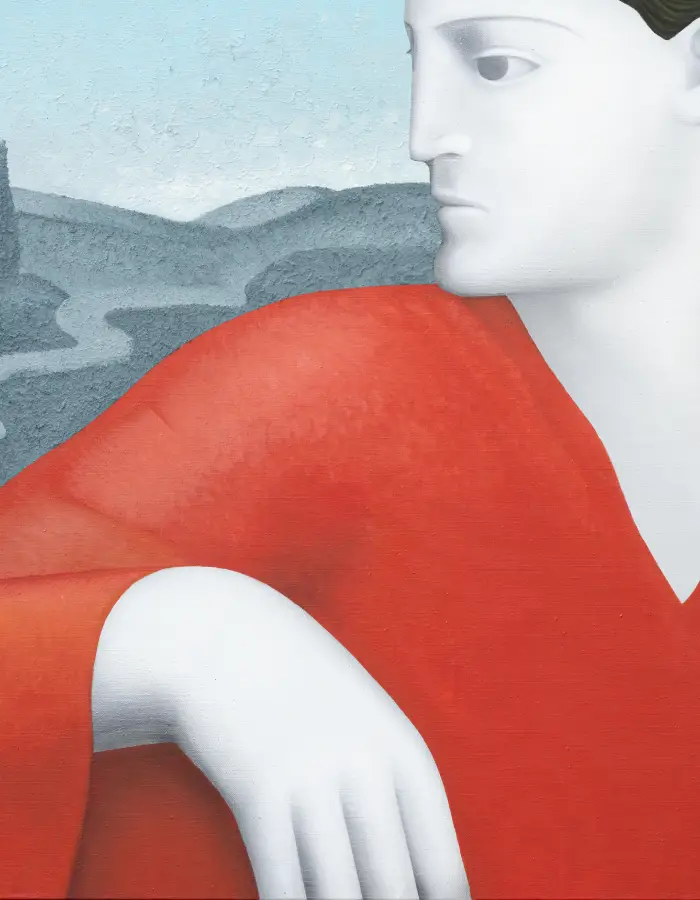
The exhibition's title refers to this intermediate position. Kovařík never starts from scratch, but he doesn't simply reproduce inherited images. He works with fragments of art history, like the "bricoleur" described by Claude Lévi-Strauss, who composes with existing materials to give them a new function. The frontality of Greek votive figures thus encounters the massive volumes of Eastern European monuments. The legacy of socialist realism engages in a dialogue with the classicism of Picasso, the style of Picabia, or that of Léger's Three Women.
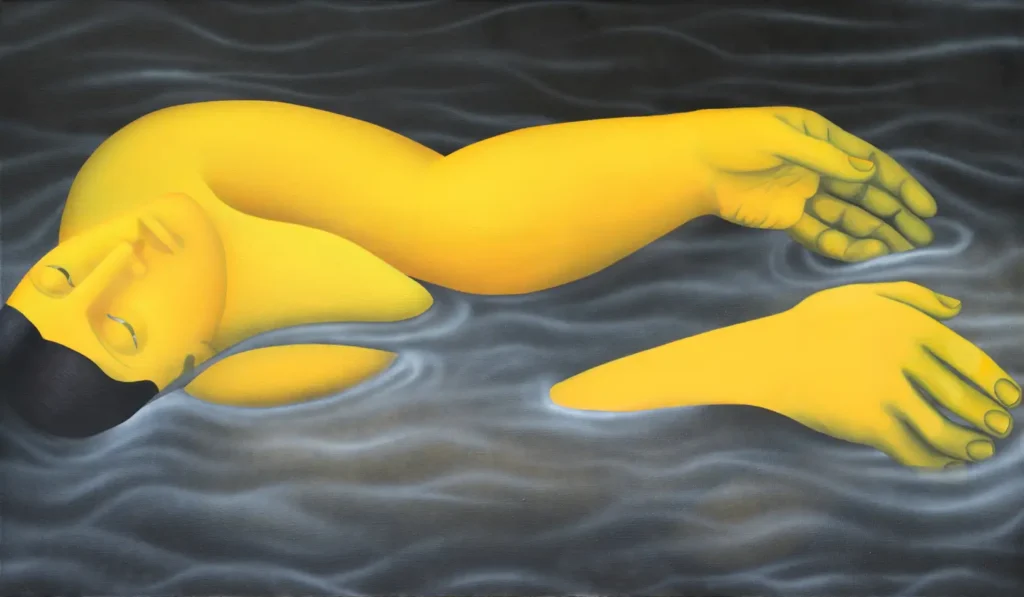
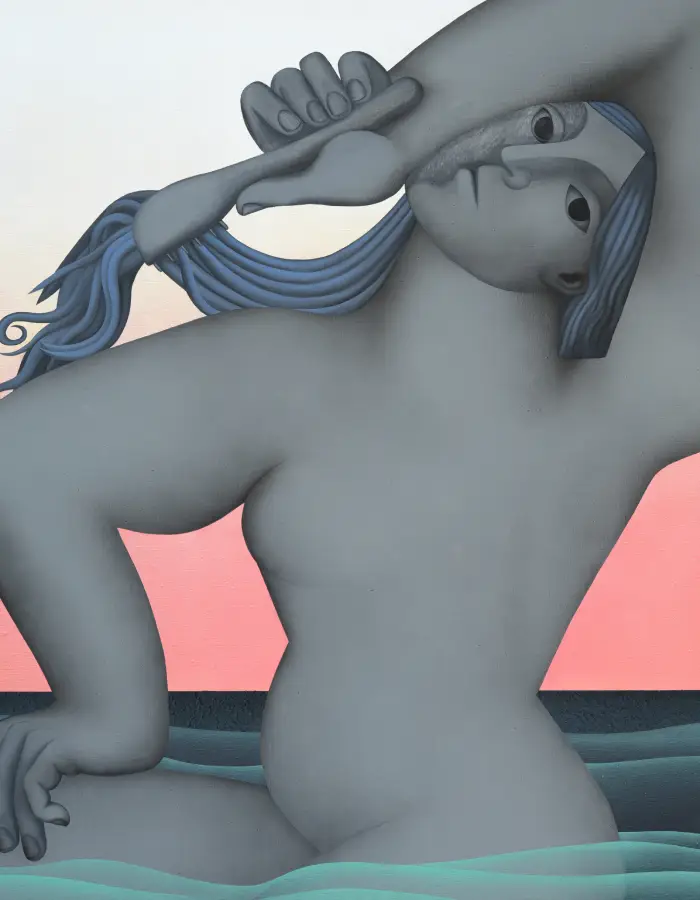
In Aglauros, Herse and Pandrosos (2026), three coral-colored women embrace amidst lush foliage. Their limbs and gazes intertwine, almost abolishing the boundary between their bodies. Born of the Sea reduces a birth myth to a standing female figure, one arm raised above her head, against a stark pink sky. In Between Two Worlds , a yellow figure floats on black water, arms outstretched, suspended between surrender and resistance.
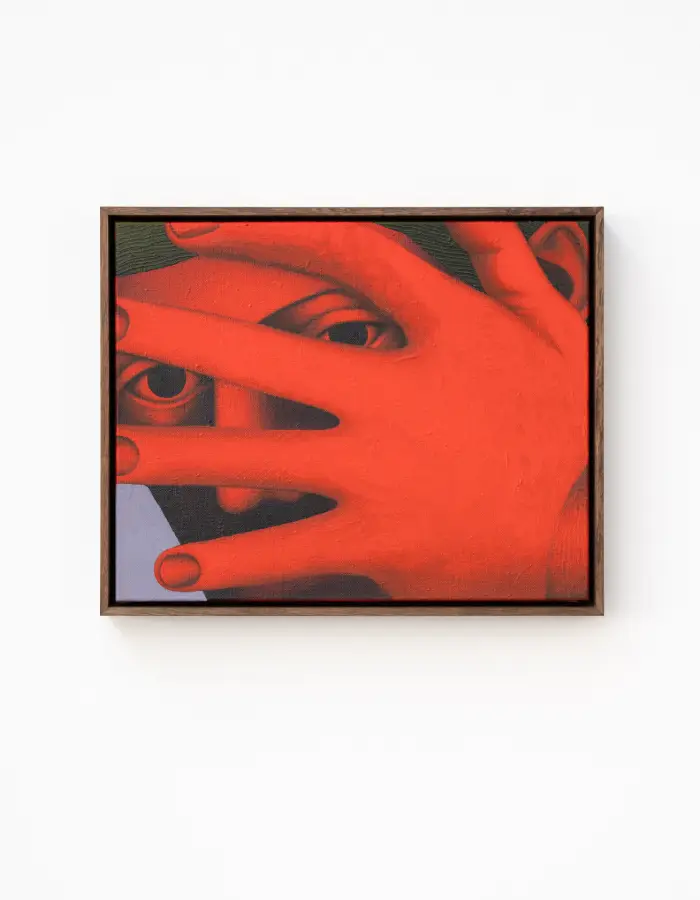
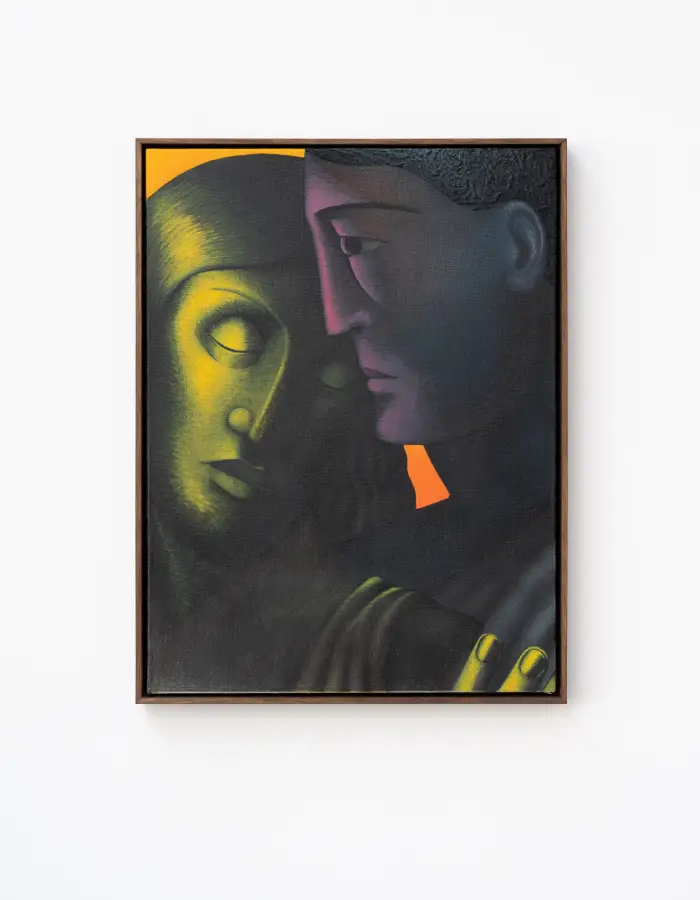
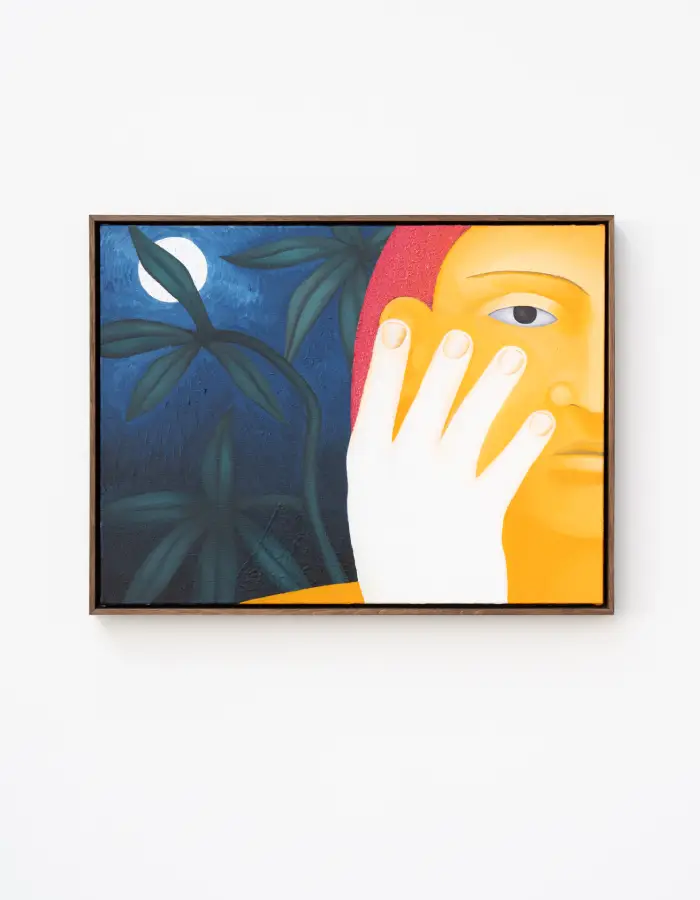
The tension between proximity and separation also runs through the smaller paintings. Faces draw closer without necessarily touching. A hand conceals part of a face in What the Night Reveals ; elsewhere, two heads are separated only by a thin gap. The emptiness between them becomes as important as the bodies themselves. At this reduced scale, intimacy paradoxically acquires a monumental power.
Two terracotta reliefs further explore this theme. * The One Who Thinks Before* and *The One Who Thinks After* juxtapose two figures, as if the thought that anticipates and that which comes after belonged to the same mind—literally, the names Prometheus and Epimetheus. In *Keeper of the Grain* , a woman gathers ears of grain. Her posture evokes both Demeter, the ancient goddess of harvests, and the idealized figure of the worker in Soviet iconography. The earth, the artist's primary material, becomes the place where the past meets the present.
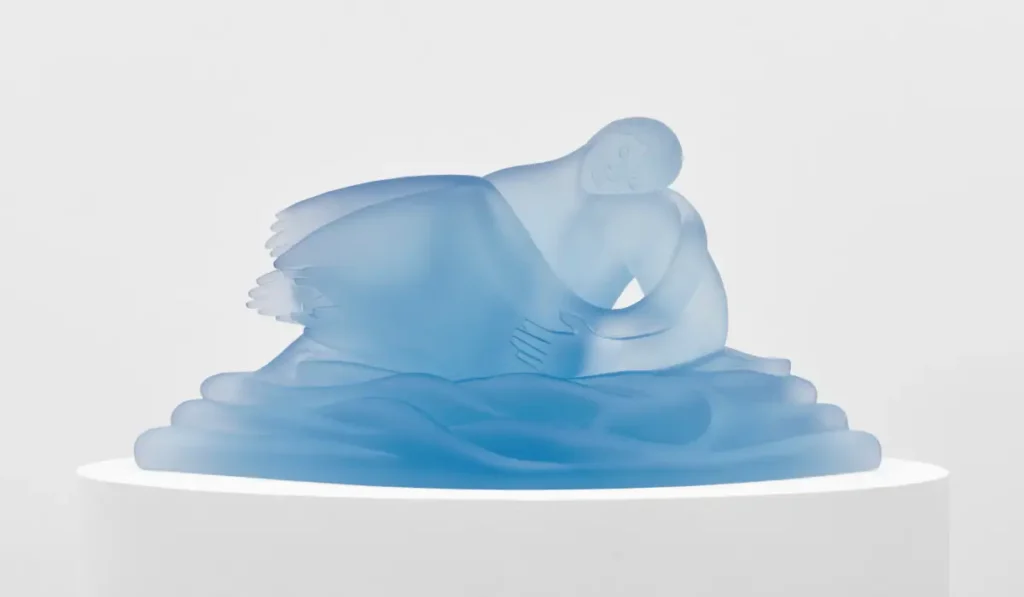
In addition to painting and terracotta, glass is also featured. In Blue Embrace , a reclining figure rests on waves, its body folded, a hand placed against it, in a translucent blue through which light passes. After the bodies laden with sand, this transparency reverses the roles: the mass lightens without losing any of its presence. And the embrace that the sculpture reveals speaks volumes about what the exhibition seeks: that moment when the distance between two bodies diminishes.
What had stopped me at Art Basel becomes even clearer in "In Between": behind their power, Kovařík's characters remain absorbed by waiting, doubt, or the desire to reach the other. Myths no longer simply tell the story of the gods; they become a way of looking at our own relationships, in that uncertain space that separates one body from another.
Vojtěch Kovařík, “In Between”
DM Mendes Wood
47 Walker Street, New York (United States)
Until 24 October 2026