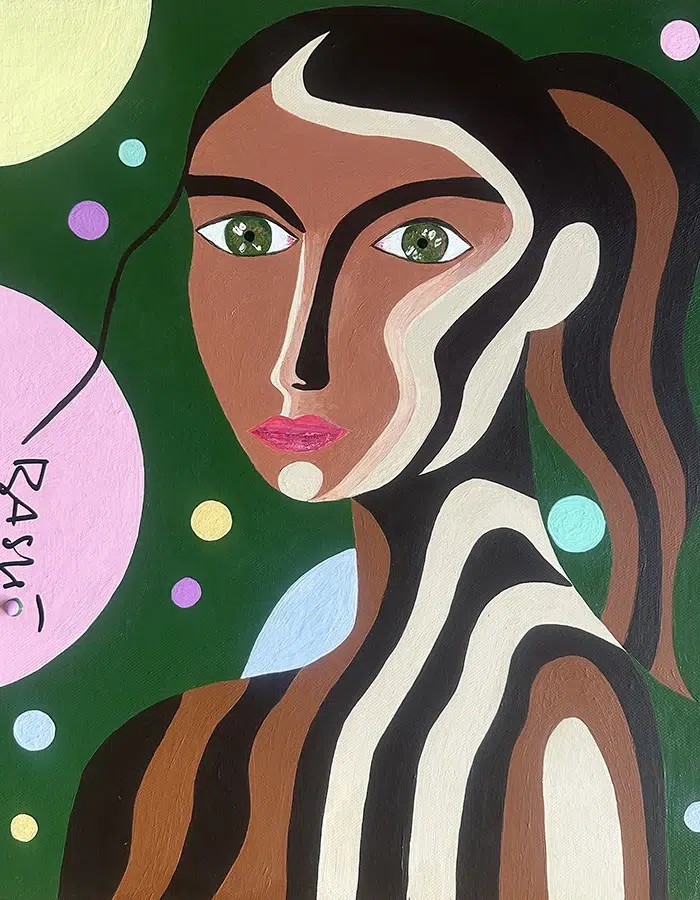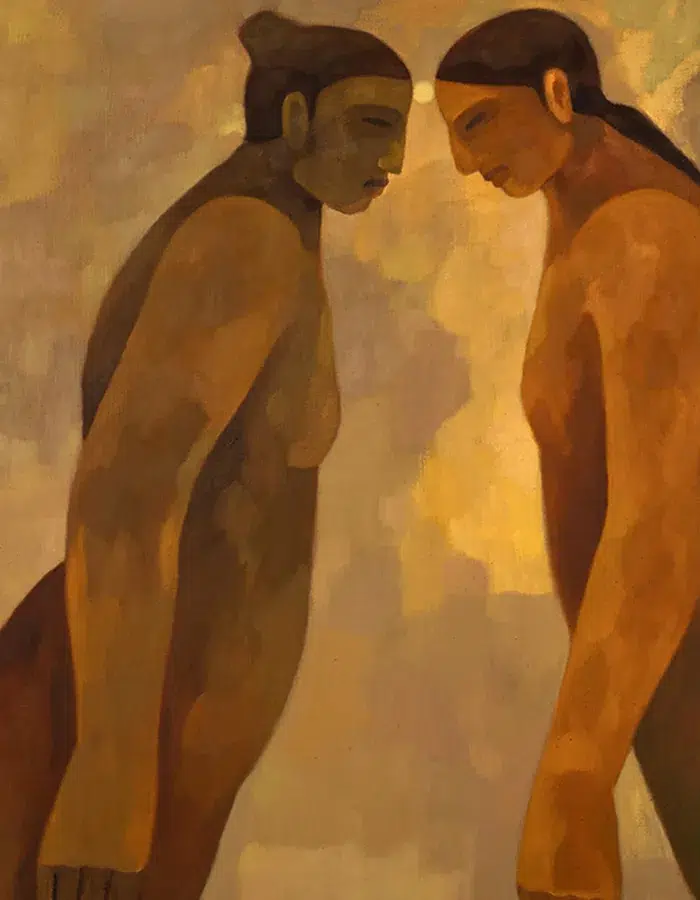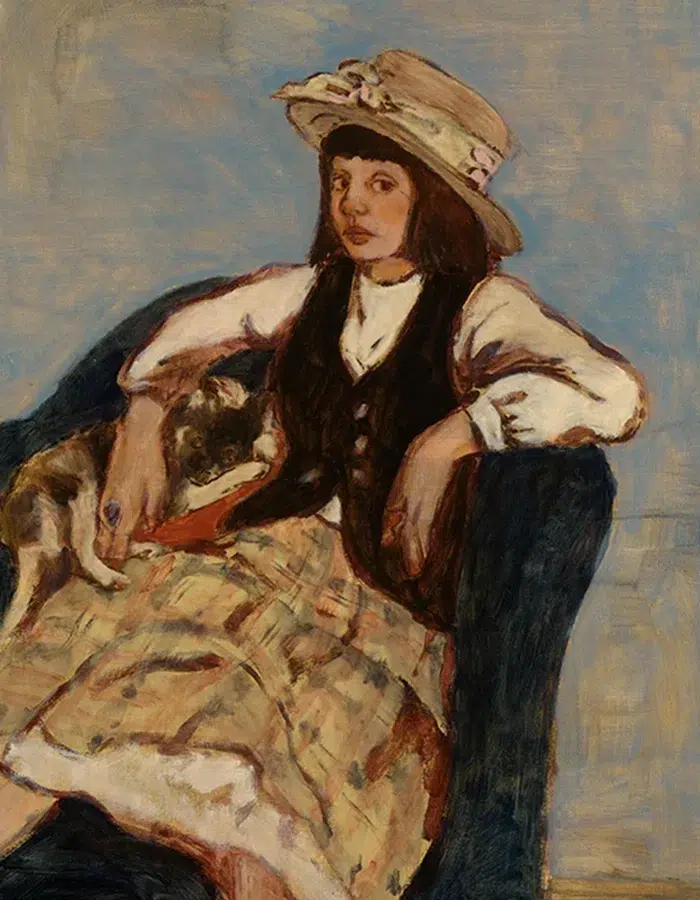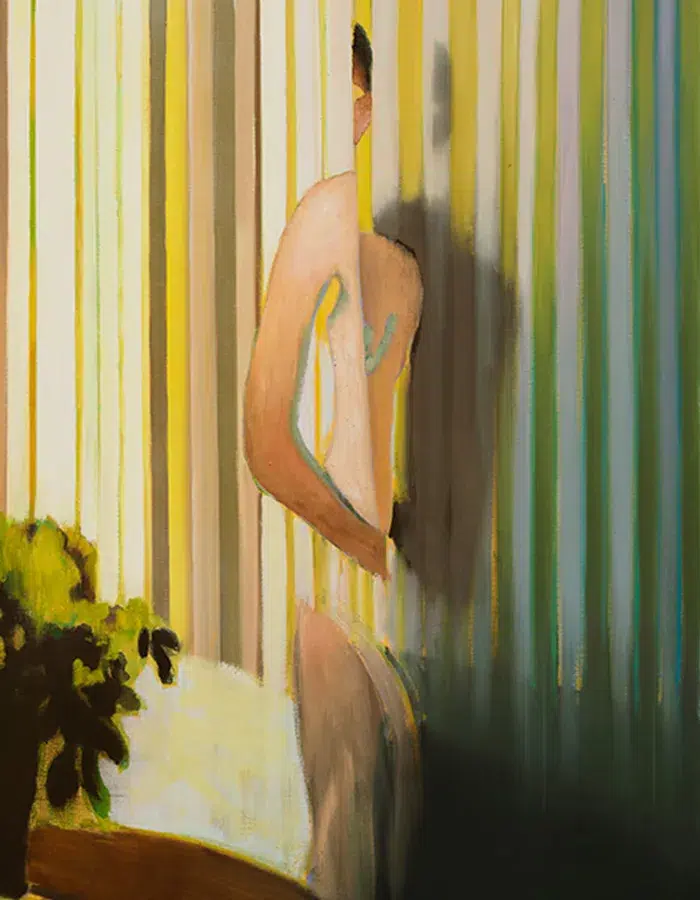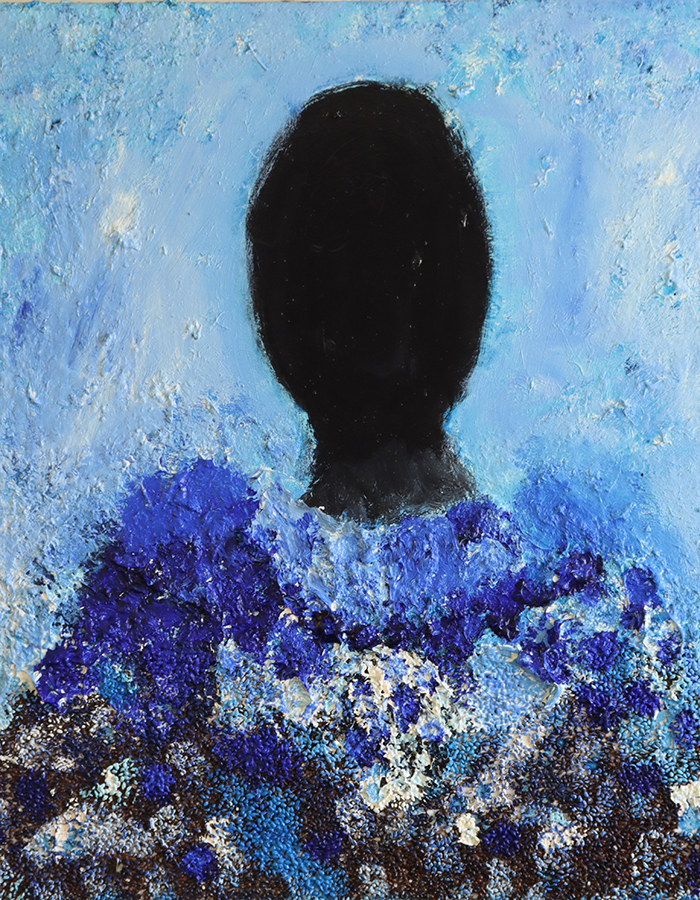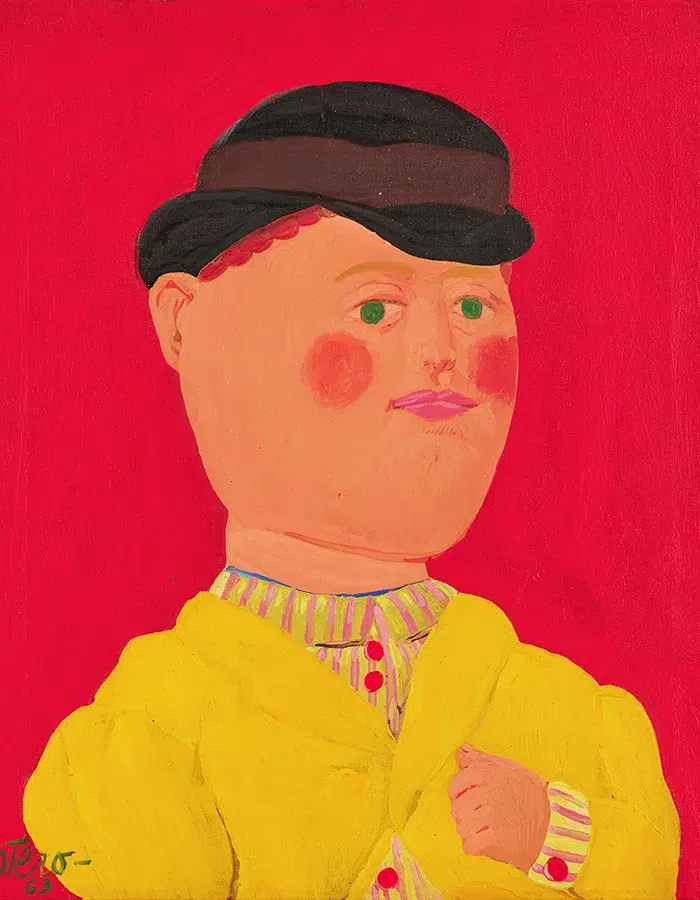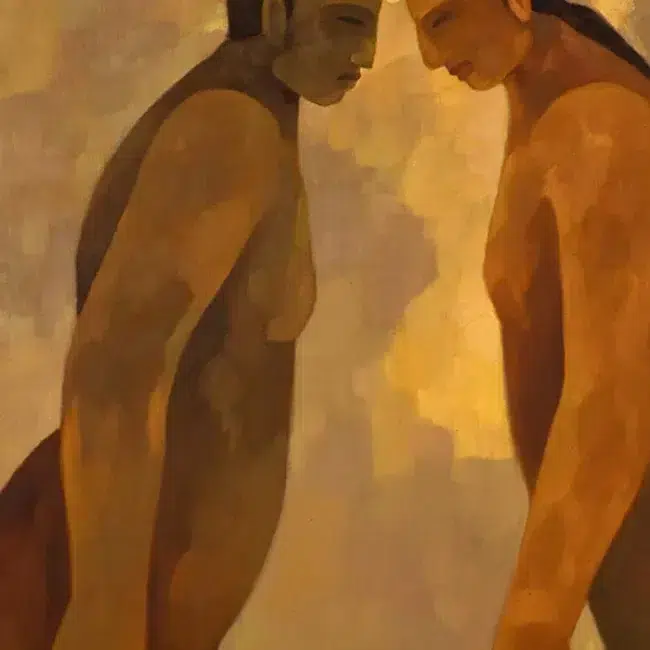
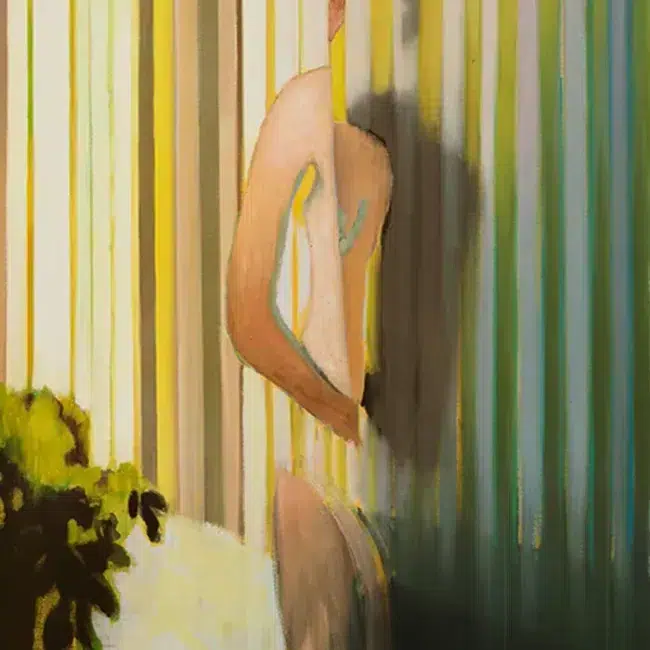

An inexhaustible source of inspiration for video games, manga, and heroic fantasy, the Middle Ages has carved out a considerable place in pop culture. This influence also extends to the world of artistic creation. Proof of this can be seen in the exhibition "Berserk & Pyrrhia, Contemporary Art and Medieval Art," which juxtaposes medieval works with contemporary creations, in collaboration with the Musée de Cluny – National Museum of the Middle Ages.


Lou Le Forban, Round, 2023, ©Lou Le Forban
Abbeys, religious orders, altarpieces, and the apocalypse. Themes and imagery with a strong identity that have found their way into contemporary art, presented in the exhibition "Berserk & Pyrrhia: Contemporary Art and Medieval Art." "We want to explore the question of interest in the medieval period and how this interest manifests itself today, " emphasizes curator Céline Poulin, with the participation of artists born at the end of the 20th or the beginning of the 21st century . Two generations, separated by several centuries from Chrétien de Troyes, who were introduced to this period through "pop culture, through the assiduous and daily consumption of manga, series, cartoons, board games, and video games, such as Zelda , Harry Potter , and of course Berserk and Wings of Fire , from which the word Pyrrhia originates." "This taste for the medieval, but without being in a historical relationship, is what Michel Huyhn (General Curator of the Cluny Museum and scientific advisor of the exhibition) calls medievalism.
“For about forty years, this term has referred to a practice that consists of viewing the contributions of the Middle Ages and its influence, both in the world of ideas and in society in general, through a contemporary and modern lens,” the historian continues . “We realize that all of us, regardless of our backgrounds, tastes, appetites, and inclinations, are the product and heirs of the Middle Ages, and very often unconsciously so. We think of it as something that is constitutive of our personality, whereas it comes from a long way back, from something that is very deeply ingrained. And this is what we find both in the work of contemporary artists and in the sources that have nourished them. ”
“What also interested us in this relationship between medieval and contemporary art is this reflection on the relations of production ,” adds the curator . “Indeed, focusing on this pre-modern period also means focusing on the pre-industrial period and on more artisanal production methods, such as ceramics, bronze, or even wood , but also blood.” For example, the artist Alison Flora created the painting Secret Portal, Secret Passage using her own hemoglobin, drawn with the aid of a catheter.

From this pre-modern period, the relationship to mysticism and religion is also heavily explored. In Shine and Struggle in Shinigami Realm , Ibrahim Meité Sikely presents a Death Note angel . He constructs the painting like a religious artwork. At its center is the heart, a motif associated with Christ, but also a unicorn. Religion is again present in Raphaël Moreira Gonçalves' Eigengrau_CH1 , a kind of low-tech neo-altarpiece that blends 3D printing, a Wi-Fi router, artificial intelligence, acrylic paint, and clay. In a different vein, the artist Teresa Fernandez-Pello also explores this church staple with The Heart of the Heart , created using discarded electronic products, electrical cables, polyester resin, acrylic paint, and steel tubing. This work questions "the evolution of beliefs, from religious faith to trust in technology."
No medieval world is complete without its magical creatures, especially its mermaids. With Mermaid's Bed , Agnes Scherer brings to life a place of sorrow, love, and illness . "It symbolizes a traditional model of domestic life, incompatible with that of the mermaid ." The mermaid, a "creature devoid of a soul, who can only acquire one by marrying a human," nevertheless remains an "anti-wife."
Architecture is also present, in the form of a reconstructed village square. On it, one finds Corentin Darré's work, * Un peu de plomb dans vos cœurs* (A Little Lead in Your Hearts ), which includes a silvered half-timbered house facade and a film recounting "a curse born of forbidden love, revealing how societies designate scapegoats in the face of the inexplicable." Our favorite piece, L. Camus-Govoroff's *OpenSource* fountain , is inspired by the figure of the Virgin Mary. "I found it interesting to study this relationship between the closed spring, which cannot be a source of life, and the Virgin Mary, who is the embodiment of Christ's life in Catholic culture. [...] I decided that this fountain would not contain water, but a decoction." "It's a mixture of plants that was created by Berkeley students around 2015 and 2017, as part of research into a non-hormonal contraceptive pill. It also parallels the fact that research in herbalism has been very limited in France. For me, this piece also represents the history of the censorship of ancestral knowledge, in favor of pharmaceutical elites or anti-feminist policies, given that this knowledge about plants was often linked to more feminist entities ," explains the artist.
While the medieval period offers an escape from contemporary rationality, it also provides a mirror in which our modern world is perfectly reflected.
“Berserk & Pyrrhia, Contemporary Art and Medieval Art”
Frac Île-de-France, Le Plateau
Until July 20, 2025
fraciledefrance.com/lieux/plateau