

Along the famous Fondamenta Zattere, opposite the Giudecca Canal, stands the Palazzo Ca' Molin, built in the 15th century. This Venetian complex holds some of the secrets of the lagoon city. Good news: since 2019, the Palazzo has been a rather unique hotel.

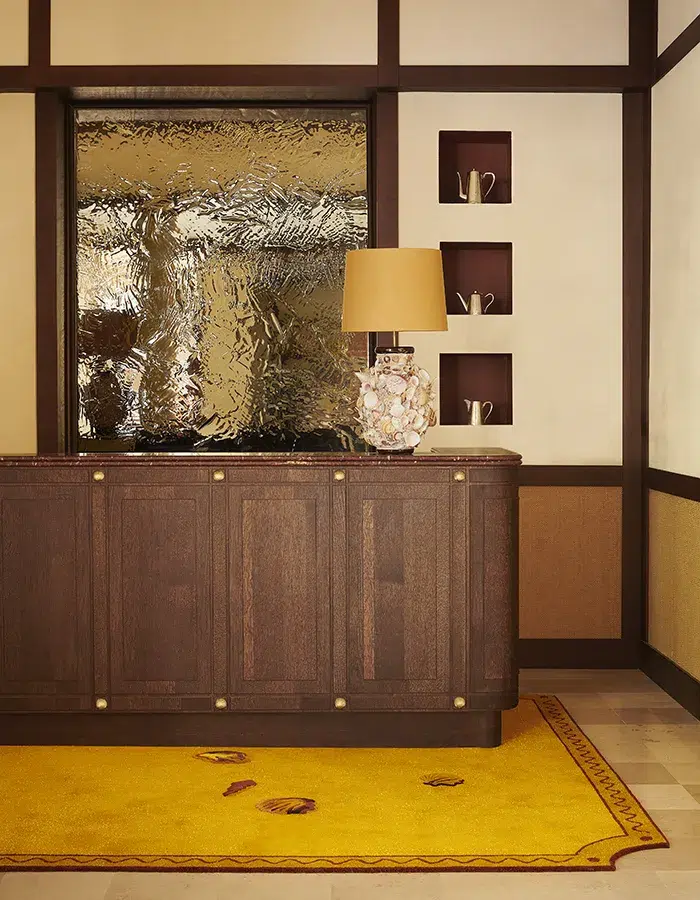
Comprising 32 rooms, Il Palazzo Experimental offers an extraordinary experience. While the hotel's private terrace overlooks the Rio del Ognissanti jetty, the Ristorante Adriatica has established itself within the Palazzo's walls. Under the direction of Chef Denis Begiqi, the Ristorante Adriatica releases bold aromas that celebrate the culinary riches of the lagoon, all within a colorful and playful decorative style. The cocktail bar, conceived by Cristina Celestino, stands out with its theme while remaining accessible to curious travelers. The light streaming through the large Gothic windows highlights the many symbols of Italy, particularly those of Venice, which interior designer Dorothée Meilichzon has subtly reinterpreted.


Following in the footsteps of countless travelers, we discover a Venice unique in its atypical character. At the heart of this picture-postcard scene, certain details catch our eye. The arches of the bridges or the transoms (glass panels above the doors that allow light to enter) that adorn the doorways become recurring decorative features in the hotel's enchanting atmosphere. The doors are all numbered in the same way as those used throughout the city; the uniformity of these inscriptions proves that there is no place like it anywhere else in the world. Venice has traversed the ages and architectural influences such as Venetian-Byzantine, Roman, Baroque, and the typical Flamboyant Gothic style. This typical Flamboyant Gothic is distinguished by its delicacy, its abundance of ornamentation, and its pointed-arch openings. It is called "Florentine" because of the plant motifs that entwine the window columns.


Venetian architecture, across all its styles, has always existed through a perfect marriage of colors such as salmon pink, pale green, and yellow. The colors, patinated by time, change shades to reveal beautiful chromatic gradations between the few cracks in the crumbling facades.
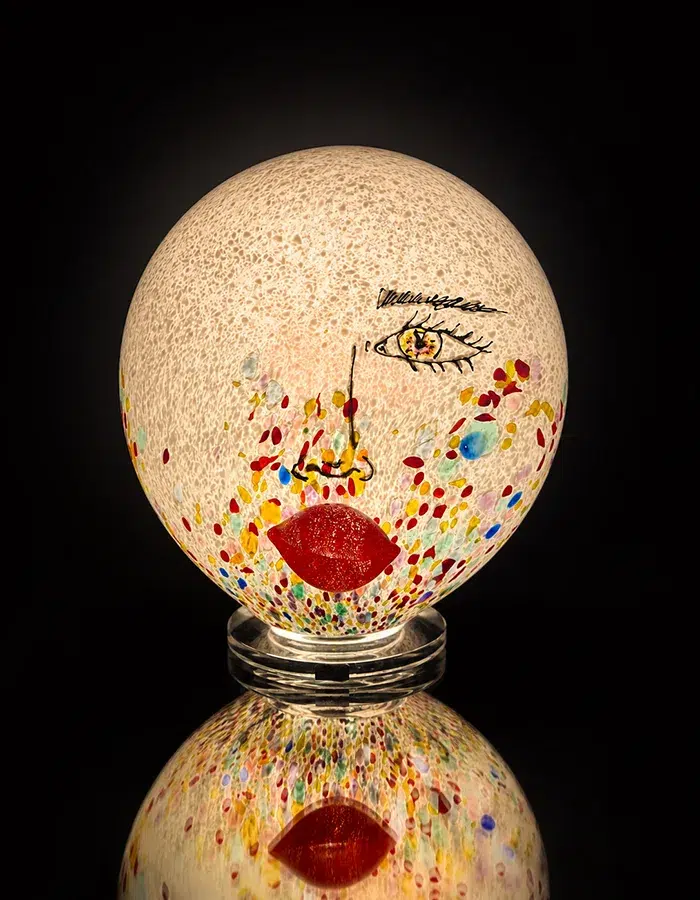
The marble-shaped lamps are the work of the renowned Luciano Vistosi. Born in Murano, near Venice, this glass artist headed the island's largest glassworks: Vetrerie Vistosi. This workshop revolutionized the way the design world perceived glass. Beyond his numerous sculptures and virtuoso works, the celebrated Murano glassmaker is known for his production of blown-glass lighting fixtures, which both pay homage to Murano's heritage and lend a mysteriously refined and captivating functional character.
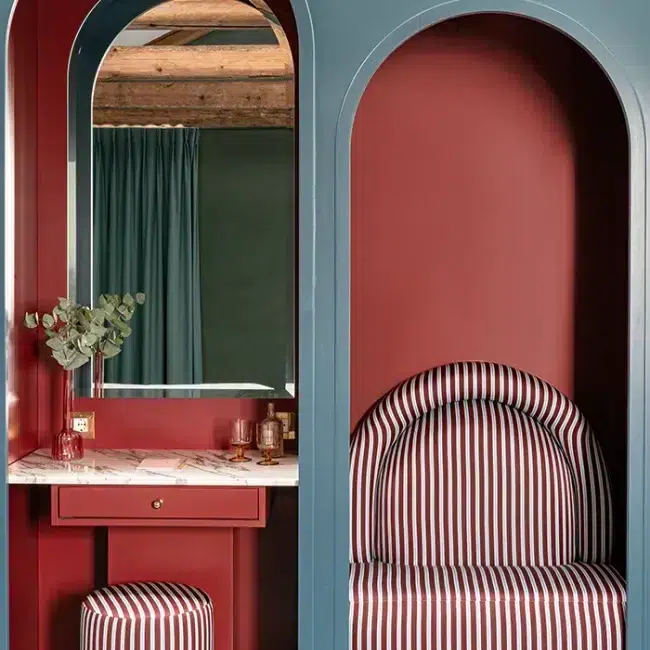
One of Italy's most iconic symbols is Breccia Capraia marble. A purely Italian marble characterized by its exquisite refinement, this white marble, quarried in Tuscany, is traversed by polychrome veins that range from purple to green. The pinkish hues accentuate the chromatic depth of this unique marble, whose impressive style typically makes it a centerpiece.

The cocktail bar, designed by Cristina Celestino, is inspired by cufflinks.
Available in various shapes and materials, the cufflink appeared in early 17th-century Europe, becoming a whimsical fashion accessory. This small, functional button is also a symbol of belonging to high society, and despite its seemingly insignificant nature, its shapes and details are nonetheless striking. In the context of the hotel, the focus is once again on paying attention to small details and intentions, even the most seemingly insignificant. Drawing inspiration from this theme, Cristina Celestino played on the ambivalence of materials, revealing new sensory properties that influence the room's configuration.

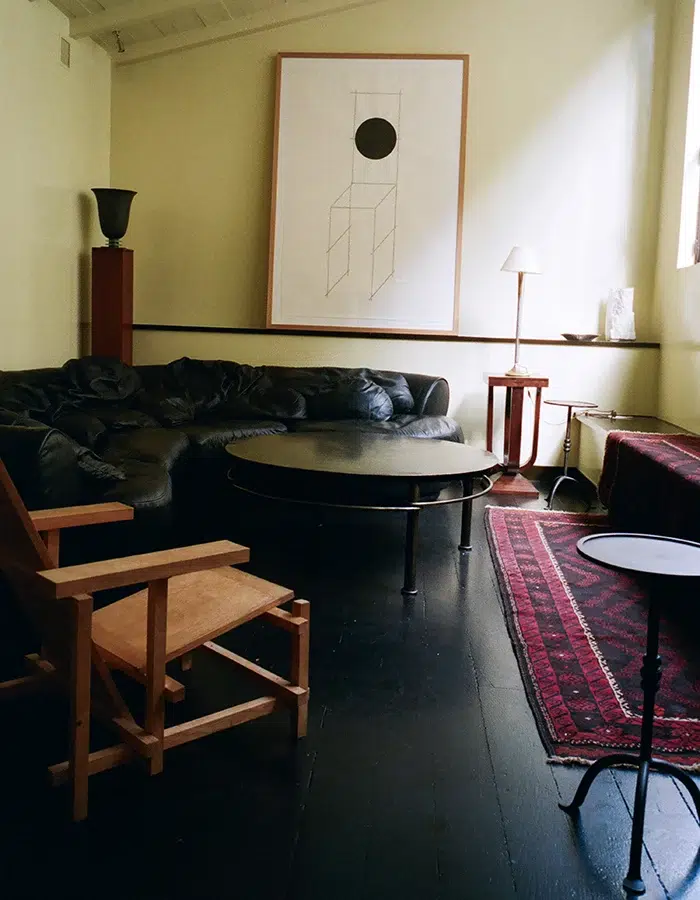
Il Palazzo Experimental immerses us in a bath of colors and surprising details that perfectly complement Venice's unique atmosphere. In the rooms, rain boots, a radio, and an old-fashioned telephone replace our technological desires. Sleeping at Il Palazzo Experimental tells a story. A story that begins with birdsong in the morning. In complete silence, nothing is more pleasant than opening the curtains to face the canal or the lush private garden. Each room is unique in its color and layout. Like the city itself, all the interconnected rooms would form a whimsical labyrinth. The rooms' decor follows a trend that challenges the limits of luxury. The Memphis movement, born in Milan in the 80s under the influence of Ettore Sottsass, embraces eccentricity. On the contrary, the very core of this style was formed by artists passionate about experimenting with forms, colors, and materials. Considered the pop art of design for its vibrant colors and organic forms, the hotel draws on the movement's geometric symbols, playing on symmetry and the harmony of volumes. Spaces are maximized to encourage the flow of both people and ideas.


Il Palazzo Experimental is a jewel box where fragments of history coexist beneath the greenish and salmon-pink hues of the lagoon city. Il Palazzo Experimental has risen to a challenge whose achievement lies in the balance and harmony it has established at the heart of an idyllic space, drawing on unique artistic and architectural references. Italian craftsmanship is showcased and contributes to the distinctive charm of this luxury hotel nestled in one of the world's most beautiful cities.