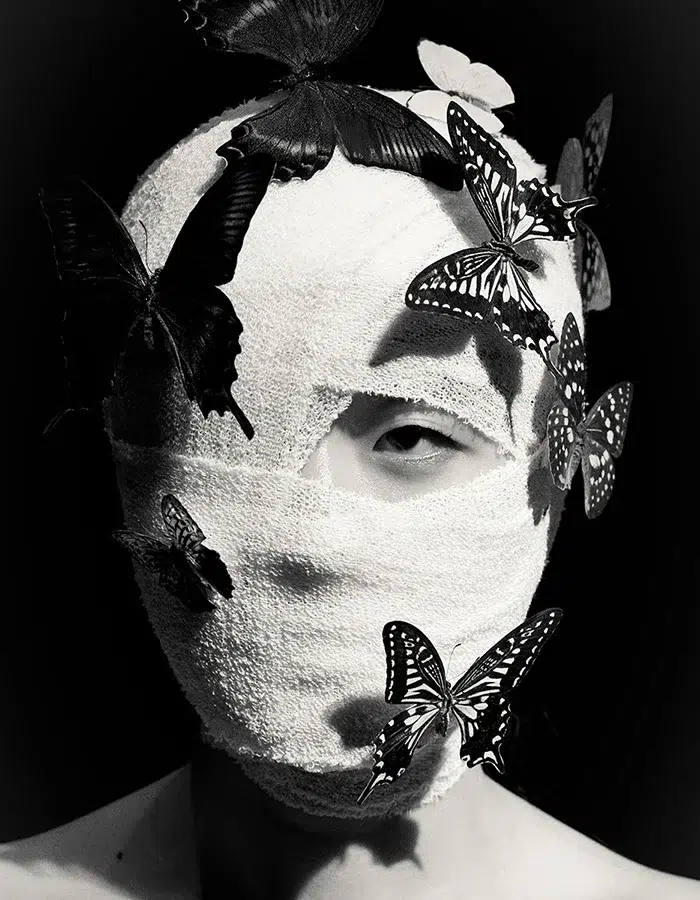
Before its official opening scheduled for 2027, the Hôtel de la Lauzière is exceptionally opening its doors for the Rencontres d'Arles photography festival. In this building currently undergoing extensive renovation, It will remain severity brings together the works of Adrianna Wallis and Diane Esmond around a common question: what remains when objects, places or beings seem to have disappeared?
“You can empty an apartment, you could even remove the air, but gravity will always remain,” wrote the physicist Joël Chevrier. A gravity that, here, transcends the laws of physics. The gravity that holds onto memories when objects disappear, works of art when they seem lost, places when they traverse time. For the 2026 Rencontres d'Arles photography festival, the Hôtel de la Lauzière is exceptionally opening its doors before its final renovation, scheduled for 2027. Conversations about life, the announcement of the James Barnor Prize, and contemporary art make up this second summer season. At the heart of this program, “ Gravity Will Remain ,” presented by the Anne-Laure Buffard Gallery, brings together the works of Adrianna Wallis and Diane Esmond in a space that itself seems to bear the traces of this memory.


Even before the artworks are displayed, the place already tells a story. Closed to the public for over sixty years, the Hôtel de la Lauzière now appears in a state of transition. The restoration work has left the walls bare, revealing 17th-century painted ceilings, dressed stone, and traces of the different eras that have shaped the building. Nothing seems completely restored, nothing is entirely erased. The architecture itself becomes an archive, where each layer removed reveals an older memory.
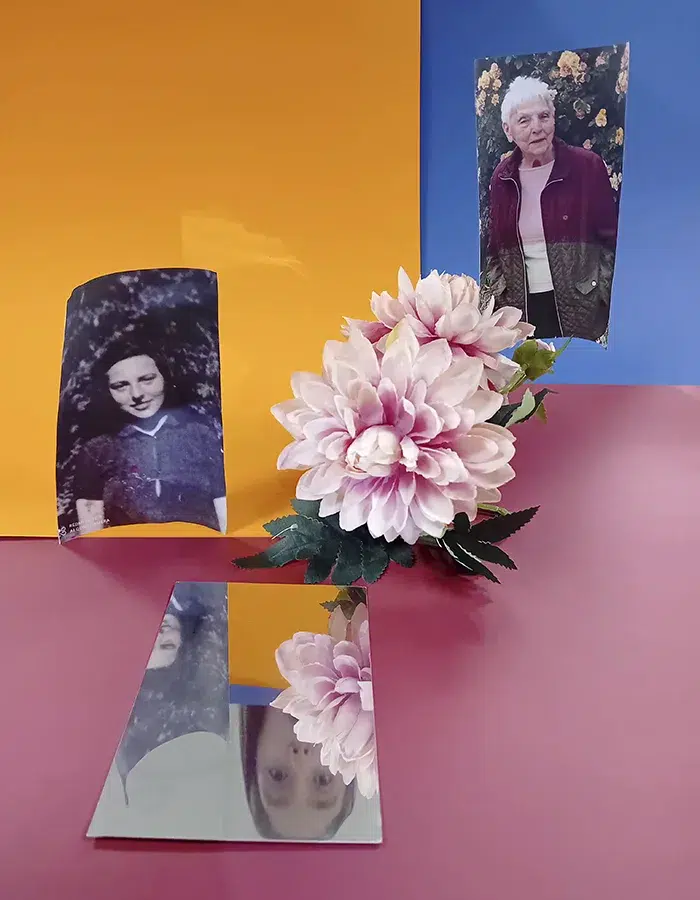
In 2021, Adrianna Wallis uncovered a family history that had remained buried for nearly 80 years. Research by historians revealed that her family had been dispossessed during the Second World War and that a large part of the works of her grandmother, the painter Diane Esmond, had disappeared. From this revelation, her work took a new direction. It no longer seeks to reconstruct what was lost, but to explore what remains: a trace, an object, a memory, sometimes simply a name. For something always remains. There are the inventories written from memory by families after the war. There are a few canvases saved from oblivion. There are absent objects whose names continue to exist. And there are the gestures.

Through her photographs, rubbings, and hand-painted texts, Adrianna Wallis never seeks to replace what has disappeared. Rather, she reveals its persistence. A spoon, a piece of fabric, a few words are enough to restore a presence to what seemed condemned to oblivion. The works unfold with restraint. They do not depict absence; they trace its contours.
This same tension runs through Bijou bougie (Candle Jewel) , undoubtedly one of the most unsettling pieces in the exhibition. Created in 2012, nearly ten years before the artist discovered her family history, the work now takes on an unexpected resonance. A pearl necklace fashioned from wax slowly melts under the flame. The object disappears as it exists. The material transforms, but the transmission remains. The work thus seems to pose a question that runs throughout the exhibition: what becomes of memories when the objects that carried them no longer exist? In contrast to these contemporary works, Diane Esmond's paintings extend the dialogue. Landscapes, interiors, still lifes, and scenes of daily life bear witness to a gaze that seeks less to faithfully represent reality than to preserve its sensitive imprint. The colors persist, the forms sometimes fade, the outlines become freer. The painting no longer documents a moment; it retains its memory.


In this dialogue between the two artists, the place itself becomes a third protagonist. The exposed stonework, the ceilings revealed by the renovations, and the marks left by centuries seem to respond to the artworks. Like the archives explored by Adrianna Wallis or the rediscovered canvases of Diane Esmond, the Hôtel de la Lauzière reminds us that erasure is never complete disappearance. Some stories remain, buried beneath layers of time, until a discerning eye brings them back to life.
The exhibition, entitled "Il restera la gravité" (Gravity Will Remain), tells more than just a family story. It explores what survives disappearance: objects, artworks, places, but also the gestures and stories that continue to circulate between generations. In a building gradually reborn from its own past, this encounter between Adrianna Wallis and Diane Esmond reminds us that memory is not preserved solely in archives. It also persists in what seemed to have vanished.

There will remain gravity , Adrianna Wallis & Diane Esmond
By the Anne-Laure Buffard gallery