“Going beyond the art of objects”: such was the aim of the Japanese-American artist Isamu Noguchi (1904-1988) to whom the Museum of Modern and Contemporary Art in Villeneuve d'Asq (Lille metropolis) is dedicating a retrospective – after the Barbican Centre in London, the Ludwig Museum in Cologne and the Zentrum Paul Klee in Bern.
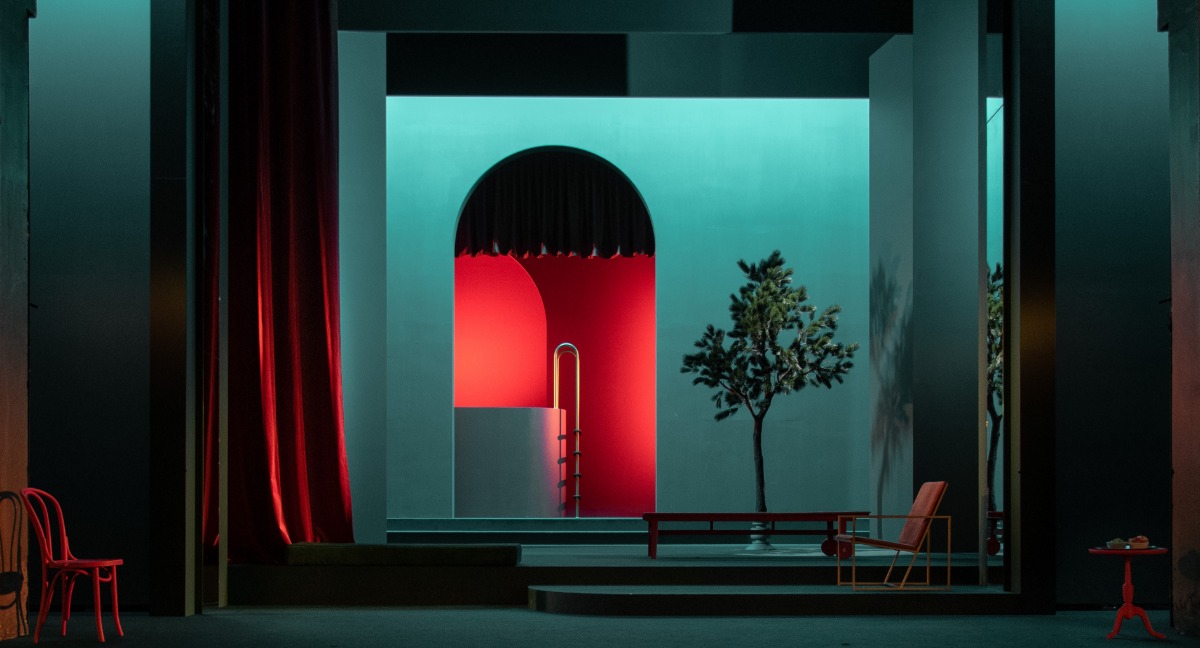
Famous for his washi paper lamps on bamboo frames, blending traditional Japanese art with the most contemporary forms, the "Akari" lamps, produced from 1952 onwards, were a testament to the artist's tireless efforts to blur the lines between art, design, and sculpture, as well as architecture, dance, and calligraphy. "I never subscribed to the idea that sculptures are merely sculptures ," he confided. As early as 1926, he was creating theatrical masks for Michio Ito, one of the masters of modern dance, and for nearly 30 years, he contributed to the creation of costumes and sets for the great choreographer Martha Graham. "Martha used them as symbolic or gestural tools. They were an extension of her body."

Foundation and
Garden Museum /
adagp, Paris, 2023

Foundation and
Garden Museum /
adagp, Paris, 2023

©The Isamu Noguchi
Foundation and
Garden Museum /
adagp, Paris, 2023
It was as an advocate of "total art" that the sculptor-designer envisioned his formal research, freed from all naturalistic mimicry, relentlessly seeking to "expand the possibilities of sculpture" by developing his art on the scale of the object and domestic space, but also of the moving body and the landscape.
Thus, in 1946, during her show Cave of the Heart , Martha Graham came to inhabit, move and metamorphose in the fascinating Spider Dress bristling with brass wires emerging from a bronze Serpent ( Spider Dress and Serpent )...
“Isamu Noguchi: Sculpting the World” – LaM
1, Allée du Musée, Villeneuve-d'Ascq
musee-lam.fr
Until July 2, 2023