
Its forms seem to emerge from a single impulse, as if the wood had begun to undulate of its own accord. Far from shaping the material, the Irish artist seeks to liberate what it already contains, somewhere between a wave, a branch, and a breath. A work where object and sculpture become one.

There is something unreal about a piece created by Joseph Walsh. The wood, which one might think rigid, curves, soars, and loops back on itself, with the grace of a line drawn without lifting the hand. It's like a movement frozen at the very moment it was about to be completed. This is the unique quality of the Irish artist: not imposing a form on the wood, but revealing the one it already seemed to contain, as if the material were simply waiting to be released.

Born in 1979 in County Cork, on the south coast of Ireland, Walsh set up his studio at the age of 20, around an 18th-century farmhouse in Fartha, where he still lives. A self-taught artist, he learned by observing, by studying the masters of Europe, by searching tirelessly, until he invented a language entirely his own. The curve returned to him naturally after a period of overly cerebral geometric forms, because it is what nature offers at its most authentic. His works do indeed seem to belong to the living world, closer to a wave or a plant stem than to a piece of furniture or a sculpture.
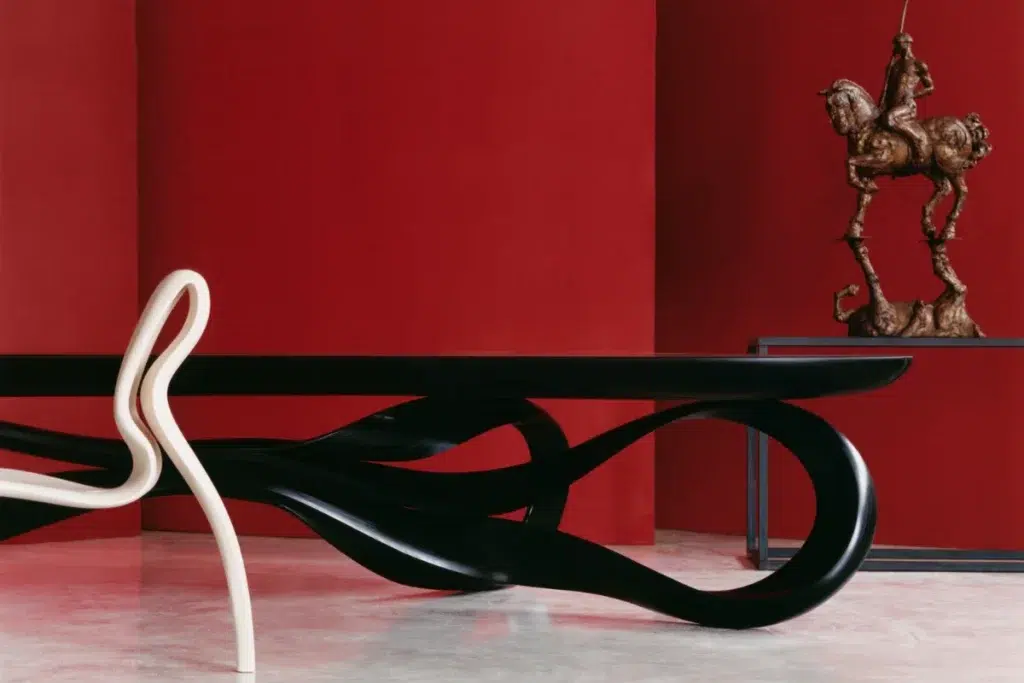
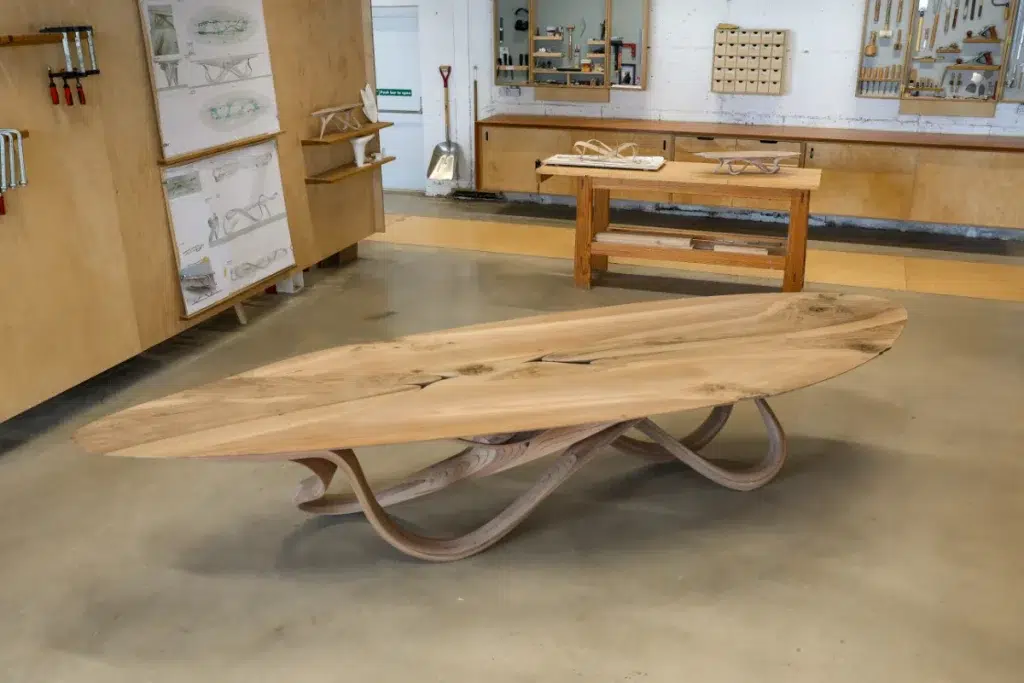
His method is akin to a quiet miracle. He layers and laminates thin sheets of wood until he achieves curves of rare suppleness and strength, transforming a heavy material into forms that convey an impression of lightness. Nothing seems forced; each piece seeks to reveal the energy already inherent in the wood. This apparent simplicity conceals an uncommon patience. Walsh sees time as an ally rather than a constraint: wood that rests becomes better, and all it costs is to wait. His studio buys the material years in advance and selects rare trees, sometimes centuries old, whose history remains inscribed in the final form. Each work thus carries the memory of a tree, a place, a long period of time.
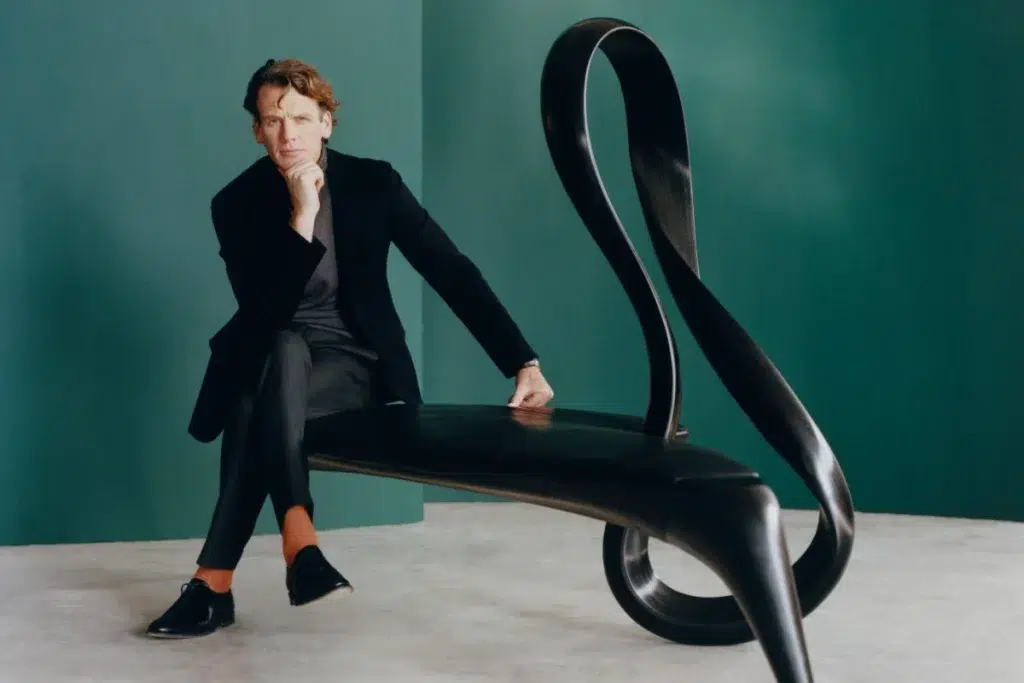
This memory permeates the pieces that have made his reputation. The Enignum table , whose surface, veined like a landscape, undulates on a base that seems to defy gravity, has become a signature; and the Enignum bench , born from the desire to carve a seat from a single plank of wood, was the starting point for his entire vocabulary. Elsewhere, his storage furniture seems to have developed naturally rather than been constructed, with its free surfaces traversed by the grain, and its hinges forged and sculpted in bronze, like living joints. Some pieces tell a story in hushed tones, like the bench carved from a centuries-old elm felled by disease, where the vanished tree finds a second life. In Walsh's work, a seat is experienced as much as it is admired, a table brings people together as much as it evokes emotion: the boundary between function and art dissolves.

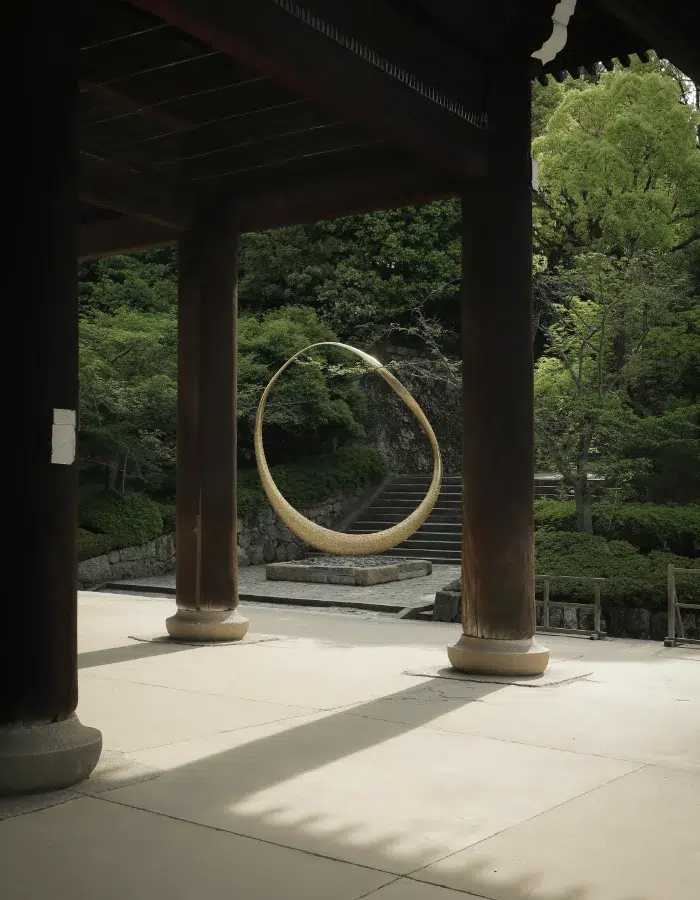
His work has long since transcended the borders of Ireland. Walsh's pieces are included in the collections of the Metropolitan Museum of Art in New York, the Centre Pompidou, the Musée des Arts Décoratifs in Paris, and the Devonshire Collections at Chatsworth; and his monumental sculpture Magnus Rinn , a ring of bronze and gilded oak, was exhibited at the Irish Pavilion of the Osaka World Expo in 2025 before being installed at the Chion-in Temple in Kyoto. True to his commitment to sharing his knowledge, he also brings together creators from all disciplines each year in Fartha for his "Making In" gathering, celebrating the act of making.
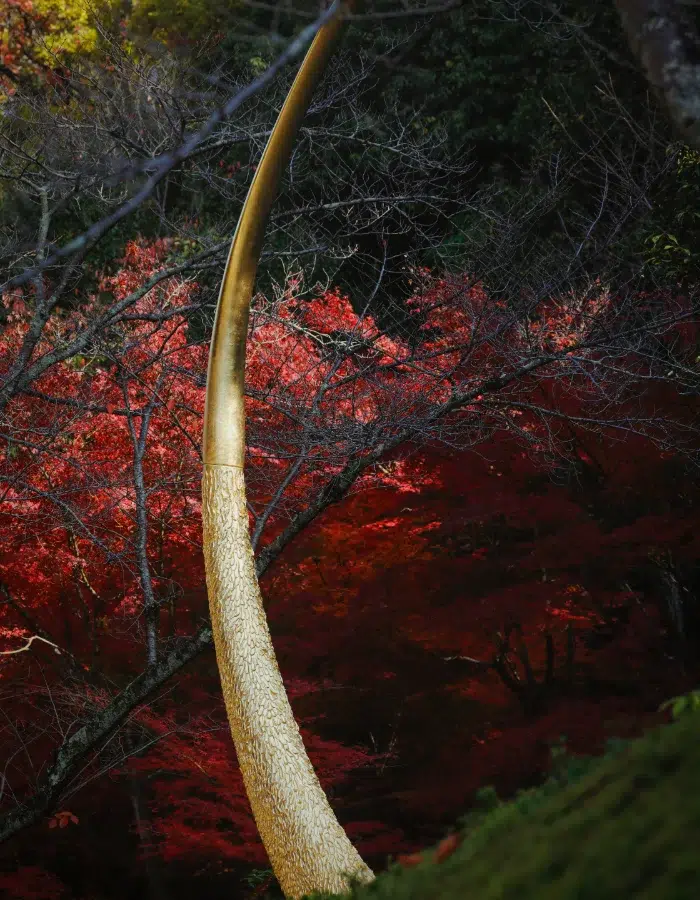
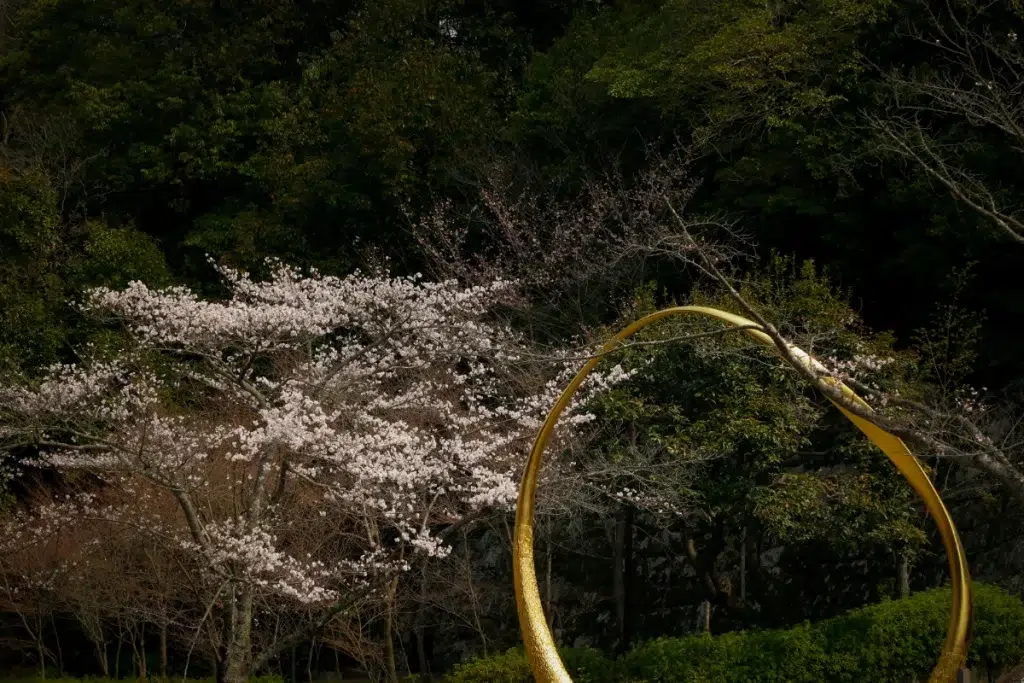
Parisian art lovers will soon be able to discover this world up close. From September 10 to October 25, 2026, as part of Paris Design Week, the Centre des Monuments Nationaux is entrusting the Hôtel de Sully, a jewel of the Marais district, to Joseph Walsh for the exhibition "Arcanum Formae" ("The Secret of Form"). Monumental sculptures in the courtyard and gardens, furniture brought together in the Orangerie: the designer will create a dialogue between his forms and several centuries of architecture, in an encounter that our blog will explore at the opening.
Therein lies perhaps the singularity of Joseph Walsh: a material captured in the gesture, where the wood ceases to be a surface to become a movement, suspended between memory, breath and poetry.

Joseph Walsh Studio
Fartha, Riverstick, County Cork (Ireland)
Coming soon as part of Paris Design Week:
“Arcanum Formae”
Garden of the Hôtel de Sully
5, Place des Vosges, Paris 4rd
From 10 September to 25 October 2026